


Send Message
Privacy statement: Your privacy is very important to Us. Our company promises not to disclose your personal information to any external company with out your explicit permission.



Titanium alloy tube is a high-performance piping solution engineered for superior strength-to-weight ratio and exceptional corrosion resistance. Unlike standard stainless steel tubes, titanium alloys offer significantly higher mechanical strength while weighing nearly half as much, making them ideal for weight-sensitive applications.
These specialized tubes are manufactured using advanced metallurgical processes to ensure consistent chemical composition and structural integrity. The material's inherent ability to form a stable oxide layer provides outstanding protection against aggressive environments, including chlorides, oxidizing acids, and seawater.
For procurement teams evaluating materials, understanding the specific grade designation is crucial. Common grades include Grade 2 (commercially pure), Grade 5 (Ti-6Al-4V), and various specialty alloys designed for extreme temperature or pressure conditions. Each grade offers distinct properties that must match your application requirements precisely.
As a leading supplier of industrial metal products, we leverage our extensive manufacturing expertise in steel and special alloys to deliver premium titanium alloy tubes that meet the most demanding specifications. Our integrated approach to quality control ensures every batch meets rigorous international standards.
Our titanium alloy tubes deliver unmatched durability with tensile strengths exceeding 900 MPa in high-grade alloys. This translates to longer service life and reduced maintenance costs for your operations, directly lowering your total cost of ownership.
We apply our 200,000 square meter manufacturing facility's advanced production capabilities to titanium processing. Every tube undergoes comprehensive testing including dimensional verification, surface inspection, and mechanical property validation to ensure consistency across large orders.
All titanium alloy tubes comply with ASTM B861, ASTM B338, AMS 4901, and other relevant international standards. Our quality management systems ensure full traceability from raw material sourcing through final delivery, simplifying your compliance documentation.
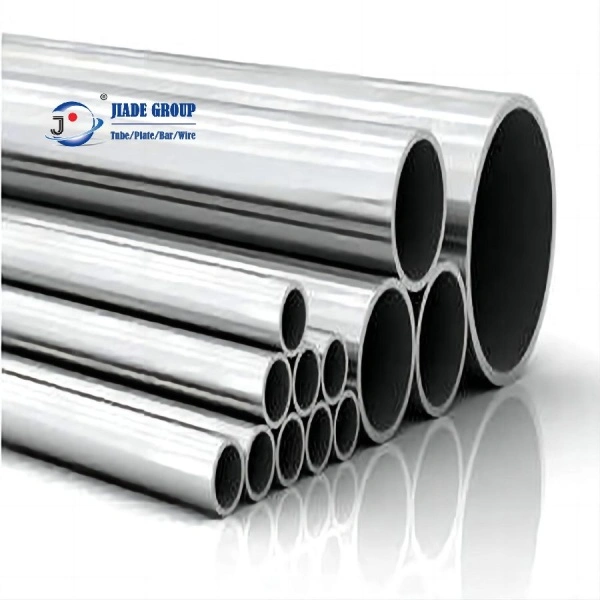
Our titanium alloy tube production follows a meticulous multi-stage quality assurance protocol that leverages our decades of experience in precision metal manufacturing. From raw material selection to final packaging, each step is controlled to ensure product reliability.
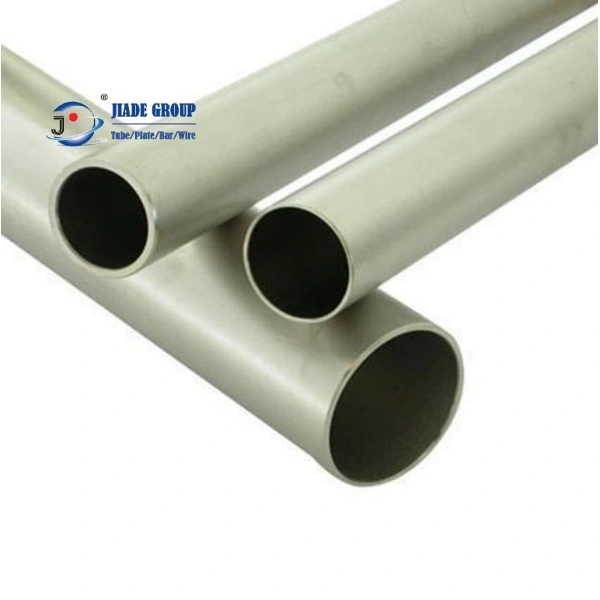
Every titanium ingot and scrap material undergoes spectrometric analysis to verify chemical composition before entering production. We maintain strict controls on interstitial elements (O, N, C, Fe, H) that significantly impact mechanical properties.
Hot working and cold working operations are conducted in controlled atmospheres to prevent contamination. Our modern facilities utilize computer-controlled rolling and drawing equipment for precise dimensional accuracy within tight tolerances.
Each heat lot receives full mechanical testing including tensile, hardness, bend, and flaring tests. Non-destructive testing options include eddy current, ultrasonic, and hydrostatic testing per customer requirements. Chemical analysis reports accompany every shipment.
Surface finishing options include pickling, polishing, and sandblasting to meet specific application requirements. Final visual inspection verifies surface quality, marking, and packaging integrity before dispatch.
Selecting the appropriate titanium alloy tube requires careful consideration of multiple technical factors. Our procurement specialists recommend evaluating these key parameters to ensure optimal performance and cost-effectiveness for your specific application.
Grade 2 (CP Titanium) offers excellent formability and corrosion resistance for general applications. It's our most commonly specified grade for chemical processing and marine environments.
Grade 5 (Ti-6Al-4V) provides approximately twice the strength of Grade 2 while maintaining good corrosion resistance. Ideal for aerospace components, high-pressure hydraulic systems, and medical implants.
Specialty Alloys including Ti-6Al-4V ELI, Ti-5Al-2.5Sn, and beta-titanium alloys serve niche applications requiring specific combinations of strength, ductility, or high-temperature performance.
Outer diameter ranges typically span from 3mm to 150mm, with wall thicknesses from 0.3mm to 12mm. Tolerance classes vary by application – precision tubing for instrumentation requires tighter tolerances than structural applications.
Tubes are available in annealed, stress-relieved, or work-hardened conditions depending on required mechanical properties. Your specification should clearly state the desired temper condition to ensure proper material behavior during fabrication and service.

Titanium alloy tubes serve critical roles across diverse industries where weight reduction, corrosion resistance, and high strength are paramount. Our extensive experience supplying to major industrial sectors ensures we understand the unique requirements of each application.
Hydraulic lines, pneumatic systems, and structural components benefit from titanium's exceptional strength-to-weight ratio. Grade 5 tubes dominate this sector for engine components and airframe applications.
Heat exchangers, reactor vessels, and piping systems handling corrosive media rely on Grade 2 and specialty alloys. Superior resistance to chlorides, oxidizing acids, and caustic solutions extends equipment lifespan significantly.
Seawater cooling systems, desalination plants, and offshore platform components require materials resistant to saltwater corrosion. Titanium eliminates biofouling concerns and provides decades of reliable service in harsh marine environments.
Surgical instruments, implantable device components, and sterilization equipment utilize biocompatible titanium alloys. Grade 5 ELI and commercially pure grades meet stringent medical certification requirements.
Condenser tubes in nuclear, coal, and gas-fired power plants benefit from titanium's immunity to flow-accelerated corrosion and stress corrosion cracking. This translates to improved plant efficiency and reduced downtime.
Downhole tools, instrument tubing, and subsea piping systems demand materials that withstand sour service conditions. Titanium alloys resist sulfide stress cracking and CO2/H2S corrosion better than most alternatives.

Before placing an order for titanium alloy tubes, use this comprehensive checklist to ensure all technical, commercial, and logistical requirements are properly addressed. This systematic approach minimizes procurement risks and prevents costly errors.
Experienced buyers know that titanium alloy tube procurement comes with unique challenges. Understanding these common pitfalls and implementing proactive solutions can save significant time and money throughout your supply chain.
Buyers often report variations in mechanical properties between production batches, causing delays and rework.
Non-standard grades or custom dimensions often face extended production schedules, disrupting project timelines.
Titanium tubes are susceptible to scratching and denting if not properly packaged, especially bright-finished surfaces.
Incorrect material identification can lead to catastrophic failures in critical applications, especially under high pressure or corrosive conditions.
Choosing the right titanium alloy tube supplier requires careful evaluation of technical capabilities, quality systems, and commercial terms. Based on our extensive experience in global metal trading, here are essential criteria for selecting a reliable supplier.
Prioritize suppliers who employ qualified metallurgists and application engineers who can provide technical guidance on grade selection, heat treatment, and fabrication considerations. Strong technical support reduces specification errors and optimizes material performance.
Verify that your supplier maintains certified quality management systems (ISO 9001, AS9100 for aerospace, or ISO 13485 for medical). Look for suppliers with comprehensive testing laboratories capable of performing all required material certifications internally.
Ensure your supplier has adequate production capacity to meet your volume requirements while maintaining quality standards. Flexible manufacturers can accommodate rush orders, custom specifications, and changing project demands without compromising delivery schedules.
Evaluate the supplier's track record for on-time delivery and their ability to source raw materials consistently. Established suppliers with strong relationships with titanium mills can secure priority allocation during market shortages.
Suppliers with international presence can provide localized support, faster response times, and streamlined logistics. Consider suppliers who offer warehousing services near your operations to reduce lead times and inventory carrying costs.
While price shouldn't be the sole deciding factor, competitive pricing combined with favorable payment terms and transparent cost structures contributes to sustainable business relationships. Request detailed quotations comparing total delivered costs rather than unit prices alone.
Below are answers to the most common questions we receive from procurement professionals regarding titanium alloy tube specifications, ordering processes, and technical considerations.
Grade 2 is commercially pure titanium offering excellent formability and corrosion resistance, while Grade 5 (Ti-6Al-4V) contains aluminum and vanadium additions that approximately double the strength. Grade 2 is ideal for general corrosion-resistant applications, whereas Grade 5 serves high-strength requirements in aerospace and medical sectors.
Standard tolerances follow ASTM B861 specifications. Outer diameter tolerance typically ranges from ±0.15mm to ±0.5mm depending on size. Wall thickness tolerance is usually ±10% of nominal thickness. Tighter tolerances are available for precision applications at additional cost.
Yes, titanium tubes can be welded using TIG, MIG, or laser welding methods with appropriate shielding gas protection. Fabrication operations like bending, flaring, and expanding are straightforward when performed with titanium-specific tooling to prevent contamination. Proper cleaning procedures are essential to maintain corrosion resistance.
Standard Grade 2 and Grade 5 tubes in common sizes typically ship within 2-4 weeks from confirmed order. Custom dimensions, specialty grades, or large volume orders may require 6-12 weeks. Expedited service is often available for urgent requirements at premium pricing.
Store tubes in clean, dry environments away from carbon steel contaminants. Use wooden or plastic supports to prevent contact with ferrous materials. Handle with clean gloves to prevent oil and sweat contamination. Protect bright-finished surfaces with appropriate wrapping and end caps during storage and transport.
Standard certifications include Mill Test Reports (MTR) with chemical analysis and mechanical test results. Industry-specific requirements may include ASME material certifications, aerospace conformances, or third-party inspection reports. All certifications should reference the specific heat number and product dimensions.
Related Products List
Contact Us

Privacy statement: Your privacy is very important to Us. Our company promises not to disclose your personal information to any external company with out your explicit permission.
Fill in more information so that we can get in touch with you faster
Privacy statement: Your privacy is very important to Us. Our company promises not to disclose your personal information to any external company with out your explicit permission.