


Send Message
Privacy statement: Your privacy is very important to Us. Our company promises not to disclose your personal information to any external company with out your explicit permission.



Stainless steel wire drawing is a critical metal forming process that reduces the cross-sectional area of stainless steel wire through tensile stress, pulling it through a series of progressively smaller dies. This mechanical working not only achieves precise dimensional tolerances but also significantly enhances the material's mechanical properties.
The process transforms raw stainless steel rods or billets into high-performance wires with superior strength, improved surface finish, and consistent mechanical characteristics. For industrial buyers, understanding this process is essential because it directly impacts the structural integrity and durability of final products ranging from construction reinforcements to medical instruments.
Precision wire drawing ensures uniform grain structure, which translates to predictable performance in demanding applications. The controlled deformation during drawing increases yield strength while maintaining adequate ductility, making stainless steel wire drawing an indispensable manufacturing step for quality-critical components.
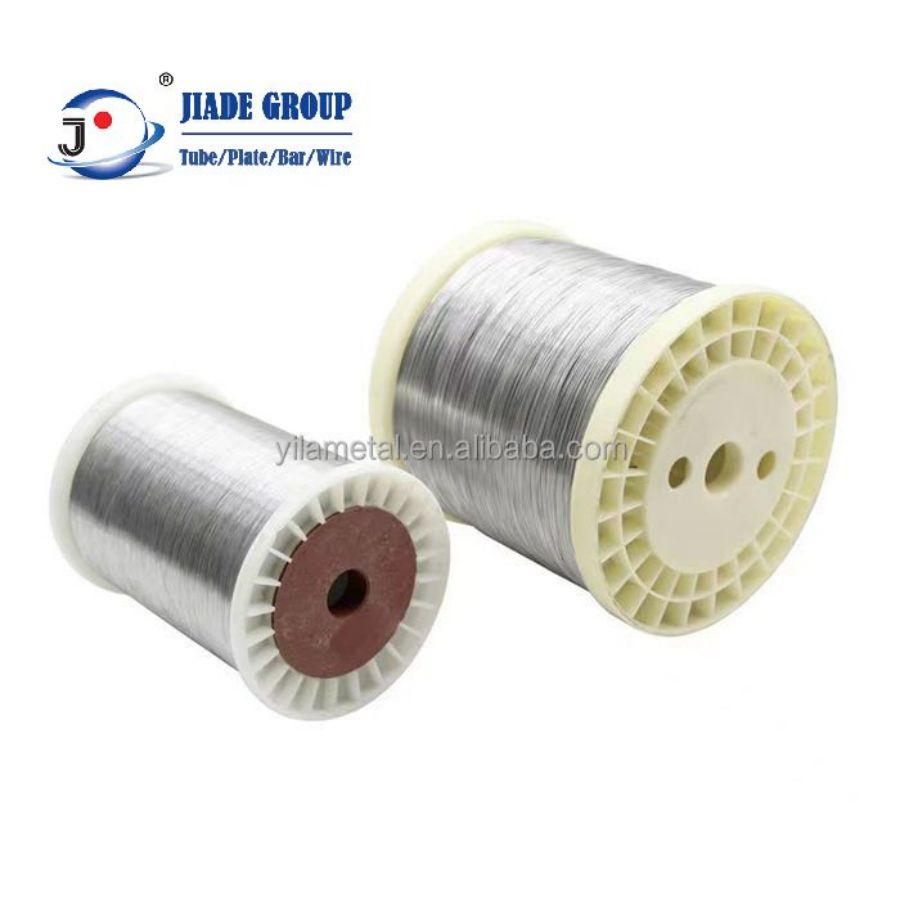
Modern wire drawing equipment maintains diameter tolerances within ±0.01mm, ensuring consistent fit and performance across production batches. This precision eliminates assembly issues and reduces downstream processing costs.
Advanced lubrication systems and polished drawing dies produce surfaces with Ra values below 0.4μm, preventing stress concentration points and extending fatigue life of finished components.
Controlled strain hardening through multi-pass drawing achieves uniform tensile strength distribution, with variations typically under 5% across production lots, guaranteeing reliable performance.
Complete mill test certificates accompany every batch, documenting chemical composition, mechanical properties, and heat treatment records for full supply chain transparency and compliance verification.
Eddy current inspection detects surface defects, cracks, and inclusions at production speeds, ensuring zero-defect delivery and reducing warranty claims from end-users.
Proper cleaning and passivation after drawing maintain chromium oxide layer integrity, preserving the inherent corrosion resistance that makes stainless steel valuable for harsh environments.
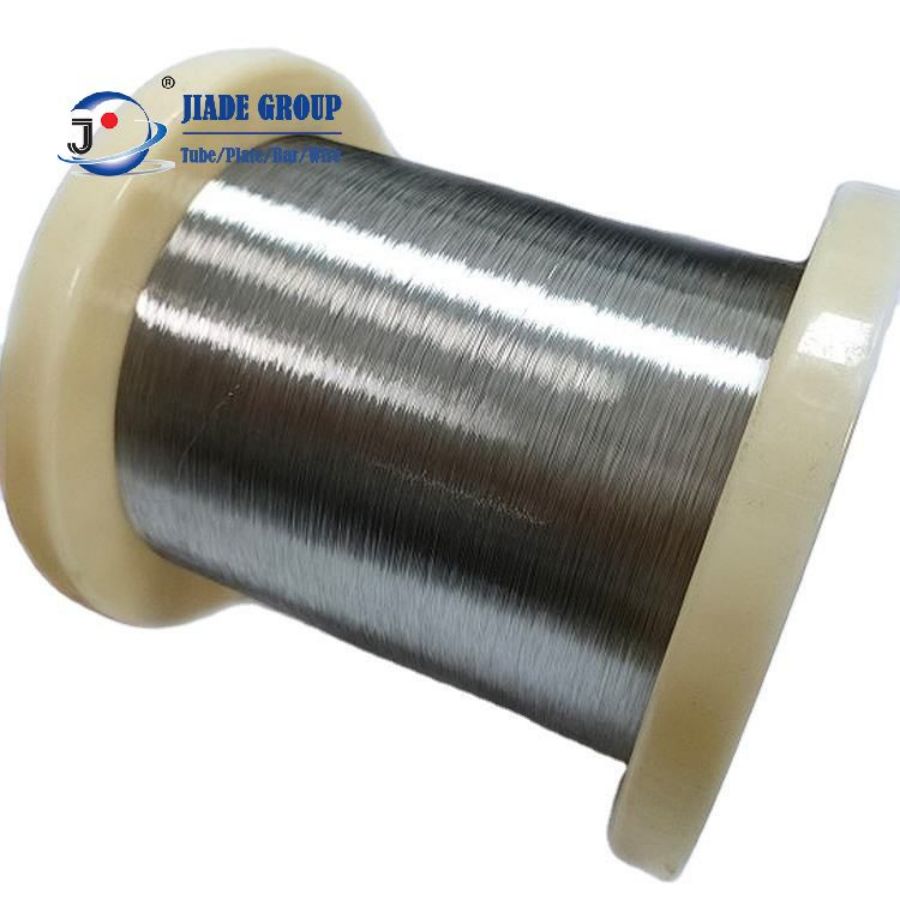
Selecting the right supplier for stainless steel wire drawing requires evaluating technical capability, quality systems, and production capacity alongside commercial terms. Buyers should prioritize suppliers who demonstrate engineering expertise in controlling drawing parameters such as reduction ratio, annealing temperature, and lubrication efficiency.
Verify that your supplier operates modern drawing benches with variable speed controls and precise tension management. Advanced equipment enables tighter tolerances and more consistent mechanical properties compared to older machinery with limited process control.
ISO 9001 certification indicates systematic quality control, but look beyond the certificate. Request audit reports showing how the supplier monitors drawing speed consistency, die wear patterns, and annealing atmosphere composition during production.
Suppliers with flexible scheduling accommodate urgent orders without compromising quality. Multi-grade capability allows one facility to serve diverse applications, simplifying procurement and reducing vendor management overhead.
Confirm exact stainless steel grade (304, 316, 410, etc.) matches application requirements. Verify mill certificates show compliant chemistry for selected grade.
Specify required diameter tolerance class (standard, precision, extra precision). Ensure supplier can consistently meet your tightest requirements.
Define whether you need annealed (soft), light drawn, medium drawn, or hard drawn condition. Each offers different strength-formability trade-offs.
Match surface roughness specifications to downstream processes. Polished finishes may be needed for visible applications; matte finishes suffice for structural uses.
Ensure packaging prevents coil damage, moisture ingress, and contamination during storage and transport. Wooden crates with desiccants provide optimal protection.
Request third-party test reports for tensile strength, hardness, bend tests, and corrosion resistance when standard mill certificates don't cover specific requirements.
Assess historical on-time delivery performance. Consistent lead times enable accurate production planning and prevent costly line stoppages.
Establish clear acceptance criteria before ordering samples. Test actual production conditions rather than laboratory-only parameters for realistic assessment.
Evaluate landed cost including freight, insurance, duties, and handling. Lower unit price may not mean lower total cost if quality issues cause rework.
Stainless steel wire drawing serves diverse industries where corrosion resistance, strength, and reliability are non-negotiable. The versatility of drawn wire enables its use in everything from architectural structures to medical devices, making it one of the most widely specified metal forms in global manufacturing.
Wire ropes and cables for suspension bridges, elevators, and building facades rely on precisely drawn stainless steel strands. The combination of high tensile strength and weather resistance ensures decades of service life with minimal maintenance.
Surgical instruments, orthopedic implants, and dental tools require ultra-clean wire drawing with strict biocompatibility standards. Medical-grade stainless steel wire drawing produces the smooth, defect-free surfaces necessary for sterile applications.

Spring wires, valve springs, and brake cable components demand consistent mechanical properties achieved through controlled wire drawing. Automotive manufacturers specify tight tolerance ranges to ensure safety-critical parts perform reliably under extreme cyclic loading.
Filter meshes, screen cloth, and reinforcement cords for rubber products utilize acid-resistant stainless steel wire. The drawing process must preserve corrosion resistance while achieving the fine diameters needed for precise filtration applications.
Cable trays, tie rods, and anchoring systems in power plants and refineries depend on stainless steel wire drawing for long-term durability in corrosive environments. Nuclear facilities specify additional purity requirements to minimize radiation activation risks.
Scratches, laps, and seams originate from contaminated drawing dies, inadequate lubrication, or damaged incoming rod surface. These defects create stress concentration points that reduce fatigue life and may cause premature failure in service.
Mitigation strategy: Implement regular die inspection schedules, maintain clean lubrication systems, and specify incoming material with verified surface quality to prevent defect formation at the source.
Inconsistent feed speed, worn drawing cones, or thermal expansion during intermediate annealing causes diameter fluctuations. Even minor variations can prevent proper fit in automated assembly equipment designed for tight tolerances.
Mitigation strategy: Use closed-loop diameter monitoring with automatic speed adjustment, replace dies before wear exceeds specification limits, and control annealing furnace temperature uniformity within ±5°C.
Excessive reduction per pass, improper die angle selection, or work hardening beyond ductility limits causes wire breaks. Production interruptions increase costs and may indicate fundamental process parameter errors.
Mitigation strategy: Calculate optimal reduction schedule based on material grade and target condition, select die angles matching the specific stainless steel alloy, and verify intermediate annealing fully restores ductility.
Incomplete stress relief annealing leaves residual stresses that cause distortion during subsequent fabrication or accelerate stress corrosion cracking in service environments containing chlorides or sulfides.
Mitigation strategy: Validate annealing cycles with hardness testing and bend tests, monitor furnace atmosphere composition to prevent oxidation, and establish statistical process control for annealing parameters.
Suppliers who control both melting and wire drawing operations offer superior quality consistency. Vertical integration eliminates material variability between separate suppliers and provides complete traceability from raw charge to finished wire.
Benefit: Single-point accountability simplifies issue resolution and reduces supply chain complexity for large-volume buyers.
Facilities focused exclusively on wire drawing often possess deeper expertise in advanced drawing techniques and niche applications. They invest heavily in specialized equipment like multi-wire machines and continuous annealing lines.
Benefit: Access to cutting-edge drawing technology and process innovation without requiring capital investment in specialized equipment.
International suppliers with regional warehouses stock common grades and sizes for immediate delivery. They combine global sourcing capabilities with local inventory to balance cost efficiency with supply responsiveness.
Benefit: Reduced lead times and emergency order capability while maintaining competitive pricing through consolidated global purchasing power.
Cold drawn wire undergoes drawing at room temperature, achieving tighter tolerances, smoother surface finish, and higher strength through work hardening. Hot drawn wire is processed above recrystallization temperature, resulting in larger diameter capabilities and softer conditions suitable for severe forming operations. Cold drawing is preferred for precision applications requiring dimensional accuracy, while hot drawing suits larger sections needing extensive subsequent forming.
Properly executed wire drawing preserves corrosion resistance when followed by adequate cleaning and passivation. However, excessive drawing reductions without intermediate annealing can trap contaminants and create microstructural defects that initiate corrosion. Selecting appropriate drawing lubricants that leave minimal residue and implementing thorough post-drawing cleaning are essential to maintaining the protective chromium oxide layer that defines stainless steel performance.
Industrial wire drawing commonly handles diameters from 0.05mm to 12mm, with specialized facilities processing wires as small as 0.02mm for medical and electronics applications. Maximum practical diameters depend on available drawing bench power and die technology, with most general-purpose facilities handling up to 10mm efficiently. Ultra-fine wires below 0.1mm require multi-wire drawing machines capable of simultaneous processing at high speeds.
Yes, mirror finishes are achievable through precision drawing using ultra-polished tungsten carbide dies combined with optimized lubrication. Surface roughness values below Ra 0.1μm are possible for decorative and hygienic applications. The process requires pristine incoming material surfaces, dust-controlled environments, and careful handling throughout production to prevent contamination that would compromise the final finish quality.
The total reduction percentage, material work hardening rate, target mechanical properties, and final diameter all influence pass count. Harder grades like 316L require more intermediate annealing cycles than austenitic 304. Larger starting diameters to final diameter ratios necessitate additional passes. Experienced drawing engineers calculate optimal reduction schedules balancing production efficiency with quality requirements, typically achieving 20-40% reduction per pass for single-pass drawing.
Annealed (soft) condition offers maximum formability for complex shaping operations. Light drawn provides moderate strength with good ductility for spring applications. Medium drawn balances strength and workability for general purpose uses. Hard drawn delivers maximum tensile strength for wire rope and structural applications where forming is minimal. Consult your engineering team to match the condition to your specific strength, ductility, and surface requirements.
Related Products List
Contact Us

Privacy statement: Your privacy is very important to Us. Our company promises not to disclose your personal information to any external company with out your explicit permission.
Fill in more information so that we can get in touch with you faster
Privacy statement: Your privacy is very important to Us. Our company promises not to disclose your personal information to any external company with out your explicit permission.