


Send Message
Privacy statement: Your privacy is very important to Us. Our company promises not to disclose your personal information to any external company with out your explicit permission.


Carbon steel pipe serves as the backbone of modern industrial infrastructure, offering a robust combination of strength, durability, and cost-effectiveness. Unlike alloy steels that rely on expensive metallic additives, carbon steel derives its mechanical properties primarily from its carbon content, making it an economical choice for high-volume structural and fluid transport applications.
For procurement professionals, understanding the distinction between seamless and welded carbon steel pipes is critical. Seamless pipes are formed by piercing a solid billet, ensuring uniformity and superior pressure resistance, which is vital for oil and gas transmission. Conversely, Electric Resistance Welded (ERW) and Submerged Arc Welded (SAW) pipes offer high production efficiency and consistency for lower-pressure structural uses.
Key Benefit: By selecting the appropriate carbon steel grade and manufacturing process, buyers can significantly reduce material costs while maintaining structural integrity in demanding environments like pipeline construction and heavy machinery.
Carbon steel pipes are manufactured in compliance with global standards including API 5L, ASTM A106, GB/T 9711, and DIN 17175. These standards define chemical limits and mechanical requirements, ensuring consistent performance across international supply chains. JIADE Group produces these pipes in facilities covering 200,000 square meters, adhering to strict quality control protocols.
With an annual output capacity of up to 600,000 tons, our manufacturing operations are designed for scale without compromising precision. Every batch of carbon steel pipe undergoes rigorous testing to meet API 5L PSL1/PSL2, ASTM, and GB standards. This ensures that your orders arrive with verified mechanical properties and dimensional accuracy.
Why It Matters: High-capacity production combined with certified quality processes means you can source large volumes of seamless, ERW, or SAW pipes with confidence. Reduced defect rates lower your risk of project delays and costly field failures.
The versatility of carbon steel pipe makes it indispensable across diverse sectors. From the high-pressure demands of petroleum extraction to the structural needs of bridge construction, these pipes provide reliable performance in challenging environments. Understanding application-specific requirements helps buyers select the optimal grade and specification.
API 5L grade pipes ensure safe transport of hydrocarbons under extreme pressure and temperature conditions.
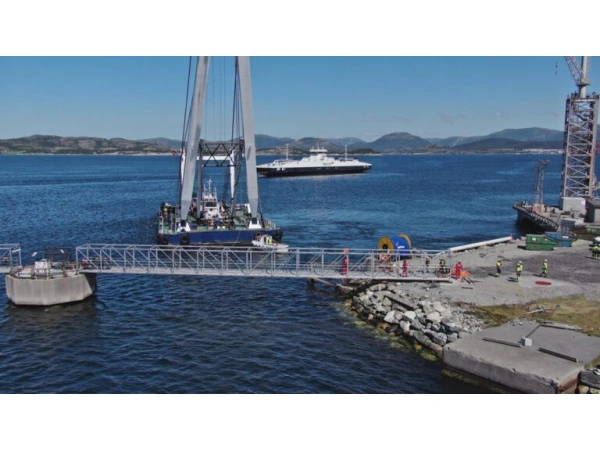
Square and rectangular tubes provide essential support for bridges, exhibition centers, and high-speed railway stations.
Specialized carbon steel variants resist corrosion from aggressive chemicals in processing plants.
Seamless pipes are ideal for high-pressure applications like boiler tubes and hydraulic cylinders due to their homogeneous structure. Welded pipes (ERW/LSAW/SSAW) are more cost-effective for structural frameworks and low-pressure fluid transport where extreme pressure resistance is not the primary concern.
Choose grades based on yield strength and toughness requirements. Common grades include Q235B, Q345B, and API 5L Gr. B, X42-X80. Higher grades offer greater strength but may require specialized welding techniques during installation.
Galvanized pipes provide enhanced corrosion resistance for outdoor or marine environments. Black pipes are suitable for indoor structural use or when external coating is applied later. Consider the operating environment to minimize long-term maintenance costs.
Precision requirements vary by application. Standard tolerances apply to general construction, while tight tolerances are necessary for mechanical components. Verify OD, WT, and length specifications against your engineering drawings to avoid fabrication issues.
Before finalizing your purchase order, verify these critical factors to mitigate supply chain risks and ensure product compatibility.
Confirm adherence to API 5L, ASTM, or GB standards required by your project specifications.
Request MTCs verifying chemical composition and mechanical properties for traceability.
Specify surface treatment (galvanized, coated, or black) based on environmental exposure.
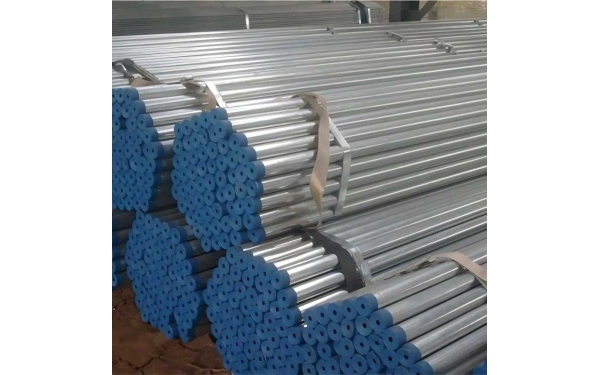
Ensure secure bundling and protection against moisture damage during ocean freight.
Confirm production schedule and shipping dates to align with your project milestones.
Verify manufacturer's annual output (e.g., 600,000 tons) to ensure they can handle your volume.
Corrosion is a primary concern for carbon steel pipes exposed to moisture or aggressive chemicals. Mitigate this risk by specifying appropriate surface treatments such as galvanization, epoxy coating, or 3PE coating for underground pipelines. Additionally, ensure proper storage conditions to prevent rust formation before installation.
Dimensional variations often result from improper mill calibration or thermal expansion during welding. To avoid this, work with manufacturers who utilize advanced automated sizing systems and conduct regular quality checks. Request detailed dimensional reports alongside Mill Test Certificates to verify compliance with tolerance standards.
Large orders can face delays due to raw material shortages or production bottlenecks. Partner with established suppliers like JIADE Group, which maintains a fixed asset base of 120 million USD and a 200,000 square meter facility. This infrastructure ensures stable production capabilities and inventory availability to meet urgent deadlines.
Mixing pipe types can lead to inconsistent performance in critical systems. Seamless pipes offer superior pressure resistance, while welded pipes are suitable for structural applications. Clearly define the application for each segment of your project and specify the correct pipe type accordingly to maintain system integrity and safety.
With 600,000 tons annual capacity and 400+ employees, we deliver consistent supply for large-scale infrastructure projects worldwide.
One-stop sourcing for seamless, ERW, LSAW, SSAW, and galvanized pipes in various grades and specifications, simplifying your procurement workflow.
Products comply with API 5L, ASTM, ANSI, DIN, and JIS standards, meeting international regulatory requirements for peace of mind.
JIADE Group brings nearly two decades of expertise in steel manufacturing and export, providing reliable partnerships for businesses seeking quality carbon steel solutions.
PSL1 covers basic requirements for pipe delivery, while PSL2 includes additional testing for chemical composition, mechanical properties, and non-destructive examination. For critical applications like high-pressure oil and gas transmission, PSL2 certification is recommended to ensure higher reliability.
Yes, carbon steel pipes are suitable for high-temperature services, particularly in boiler applications. Grades like ASTM A106 Grade B are specifically designed for high-temperature service. However, for extremely high temperatures, alloy steel pipes may be more appropriate.
Lead times vary based on product type and quantity. Standard sizes may be available from stock for immediate shipment. Custom orders typically require 15-30 days for production, depending on specifications and volume. We recommend planning ahead for large projects to ensure timely delivery.
We use secure bundling with steel straps and protective end caps to prevent damage during handling. For corrosive environments, pipes are wrapped in waterproof materials. This comprehensive packaging strategy minimizes the risk of transit damage and ensures products arrive in perfect condition.
Yes, every shipment includes Mill Test Certificates (MTCs) detailing chemical composition, mechanical properties, and test results. These documents are essential for quality assurance and regulatory compliance in your country.
Related Products List
Contact Us

Privacy statement: Your privacy is very important to Us. Our company promises not to disclose your personal information to any external company with out your explicit permission.
Fill in more information so that we can get in touch with you faster
Privacy statement: Your privacy is very important to Us. Our company promises not to disclose your personal information to any external company with out your explicit permission.