


Send Message
Privacy statement: Your privacy is very important to Us. Our company promises not to disclose your personal information to any external company with out your explicit permission.


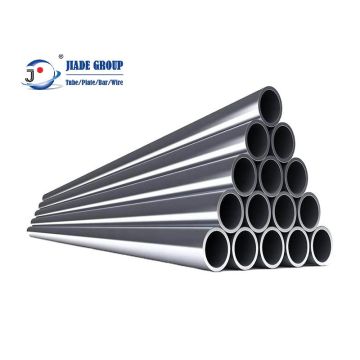


Line pipe is a critical component of industrial infrastructure, designed specifically to transport fluids like oil, gas, water, and chemicals over long distances. Unlike standard structural pipes, line pipe is engineered to withstand high pressures and harsh environmental conditions, ensuring the safe and efficient flow of resources across continents.
For procurement professionals, understanding the distinction between line pipe and other steel tubing is essential. Line pipe is manufactured to strict international standards such as API 5L, ASTM, and DIN, guaranteeing consistency in wall thickness, tensile strength, and corrosion resistance. Whether you are building a new high-pressure pipeline or maintaining an existing network, selecting the correct grade of line pipe minimizes downtime and reduces long-term operational risks.
Key Takeaway: High-quality line pipe is not just a commodity; it is a strategic asset that ensures the reliability and safety of your energy and utility projects.
Our line pipe manufacturing adheres to rigorous global standards including API 5L PSL1/PSL2, GB, ASTM, ANSI, DIN, and JIS. This compliance ensures that every batch meets specific chemical and mechanical requirements, simplifying your regulatory approvals and reducing the risk of non-conformance during audits.
With a modern factory spanning 200,000 square meters and an annual output capacity of up to 600,000 tons, we offer scalable production solutions. This massive capacity ensures that even large-scale infrastructure projects receive timely deliveries without compromising on quality control processes.
We produce a wide range of line pipe types, including seamless, ERW, LSAW, SSAW, and spiral steel pipes. Our state-of-the-art facilities utilize advanced automation to ensure precise dimensions and consistent wall thickness, which are critical for welding integrity and pressure handling in complex pipeline systems.
Every meter of line pipe undergoes comprehensive testing, including hydrostatic tests, ultrasonic inspection, and non-destructive testing (NDT). This multi-layered quality assurance process guarantees that our products meet the highest safety standards, protecting your investment against leaks and failures.
Selecting the appropriate line pipe involves balancing technical specifications with budget constraints and project timelines. Here are the key factors procurement managers must evaluate to make an informed decision.
| Selection Factor | Considerations | Impact on Performance |
|---|---|---|
| Grade & Standard | API 5L Grades (e.g., X42, X52, X60, X70) | Determines yield strength and suitability for high-pressure environments. |
| Diameter & Wall Thickness | Nominal Pipe Size (NPS) and Schedule | Affects flow capacity and structural integrity under external loads. |
| Manufacturing Process | Seamless vs. Welded (ERW/LSAW/SSAW) | Seamless offers higher strength for extreme conditions; welded is cost-effective for lower pressures. |
| Corrosion Resistance | Coatings and Material Composition | Essential for longevity in corrosive environments like offshore or chemical pipelines. |
| Certifications | ISO, API, CE, etc. | Ensures compliance with local regulations and international safety standards. |
Use this checklist to streamline your sourcing process and mitigate risks associated with steel pipe procurement.
Procuring line pipe can be challenging due to market volatility and technical complexities. Here are common issues and how to address them.
Problem: Variations in wall thickness or material composition leading to failures.
Solution: Partner with manufacturers who have robust QA/QC processes and provide full traceability documentation.
Problem: Production bottlenecks causing missed project deadlines.
Solution: Work with suppliers with proven capacity and realistic lead time estimates. Plan for buffer stock.
Problem: Premature degradation of pipes due to environmental factors.
Solution: Specify appropriate grades and protective coatings based on the operating environment.
Shaanxi Jiade Group Co., Ltd stands out as a premier supplier of line pipe due to its extensive experience, large-scale production capabilities, and commitment to quality. Founded in 2005, we have built a reputation for delivering reliable steel products to global markets.
Key Advantages:
By choosing Jiade Group, you gain a partner dedicated to supporting your project's success through consistent quality, competitive pricing, and responsive service.
Seamless line pipe is made from a solid round tube heated and pierced to form a hollow shell, resulting in no weld seams. It is ideal for high-pressure applications. Welded line pipe (ERW, LSAW, SSAW) is formed by rolling steel plate and welding the seam. It is generally more cost-effective and suitable for lower-pressure applications or larger diameters.
The most common standards are API 5L (American Petroleum Institute), which specifies requirements for seamless and welded steel line pipe for pipeline transportation systems. Other standards include ASTM A106 (seamless carbon steel pipe for high-temperature service) and ASTM A53 (general-purpose welded and seamless steel pipe).
The grade depends on the operating pressure, temperature, and fluid being transported. Higher grades (e.g., X70, X80) offer higher yield strength, allowing for thinner walls and lower costs, but require careful welding procedures. Consult with engineering experts to select the optimal grade for your specific application.
Lead times vary depending on the product type, quantity, and current market conditions. Generally, seamless pipes may have longer lead times than welded pipes. It is advisable to plan orders well in advance and maintain open communication with your supplier to manage expectations.
Yes, Jiade Group has the capability to manufacture line pipes in various sizes and specifications to meet unique project requirements. Contact our sales team with your specific needs for a tailored solution.
Related Products List
Contact Us

Privacy statement: Your privacy is very important to Us. Our company promises not to disclose your personal information to any external company with out your explicit permission.
Fill in more information so that we can get in touch with you faster
Privacy statement: Your privacy is very important to Us. Our company promises not to disclose your personal information to any external company with out your explicit permission.