


Send Message
Privacy statement: Your privacy is very important to Us. Our company promises not to disclose your personal information to any external company with out your explicit permission.



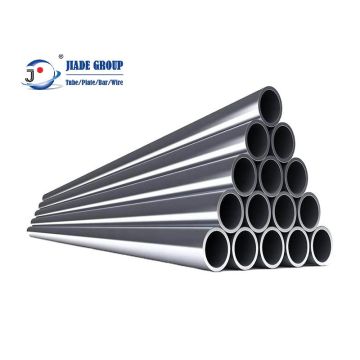


Duplex seamless pipe is a high-performance steel tubing solution designed for extreme industrial environments. Unlike standard carbon steel pipes, duplex stainless steel combines the strength of ferritic steel with the corrosion resistance of austenitic steel, creating a microstructure that offers superior mechanical properties.
For procurement managers sourcing materials for aggressive chemical processing or offshore oil and gas projects, duplex seamless pipe provides an ideal balance of yield strength and toughness. The dual-phase structure significantly reduces susceptibility to stress corrosion cracking while maintaining excellent weldability.
The manufacturing process involves precise control of alloying elements including chromium, nickel, molybdenum, and nitrogen. This controlled composition ensures consistent phase balance between the austenite and ferrite structures, typically aiming for a 50/50 ratio. This specific metallurgical engineering translates directly into extended service life and reduced maintenance costs for end-users operating in corrosive environments.

Our modern facility spans 200,000 square meters with annual output capacity reaching 600,000 tons. This massive production scale ensures reliable supply chain stability for large-scale duplex seamless pipe orders without compromising quality consistency.
Every batch of duplex seamless pipe undergoes comprehensive testing including hydrostatic pressure tests, non-destructive examination, and metallurgical analysis. Our quality management systems comply with international standards including ASTM A789/A790 for seamless and welded duplex stainless steel pipes.
With over 18 years of specialized experience since 2005, our manufacturing processes are optimized specifically for duplex stainless steel production. The fixed asset base of 120 million USD supports state-of-the-art equipment ensuring consistent product performance across all shipments.
Ensure your supplier can provide complete material test certificates (MTC) with detailed chemical composition analysis and mechanical property reports. For duplex seamless pipe, verify that the chromium, nickel, molybdenum, and nitrogen content meets specified grade requirements such as 2205 or 2507 super duplex grades.
Verify that your manufacturer maintains relevant certifications including API, ISO, and PED compliance. Look for suppliers who understand international standards like ASTM, ASME, EN, and JIS specifications for duplex stainless steel piping systems.
Assess the manufacturer's actual production capacity versus their claimed capabilities. A supplier with 600,000 tons annual output can handle large duplex seamless pipe orders reliably. Verify current lead times and ability to meet project deadlines.
Choose manufacturers with proven experience in your specific industry application. Whether for seawater desalination, chemical processing, or oil and gas pipelines, experienced suppliers provide valuable technical guidance on duplex seamless pipe selection and installation.
Confirm the correct duplex grade for your application: Standard Duplex (2205) for general corrosive environments or Super Duplex (2507) for highly aggressive conditions with elevated chloride levels.
Verify outer diameter, wall thickness, and length tolerances meet your project specifications. Precision manufacturing reduces fitting adjustments and installation delays on-site.
Check surface finish requirements: Pickled and passivated surfaces prevent corrosion initiation points. Smooth internal surfaces reduce fluid friction and maintain flow efficiency.
Request comprehensive test reports including PMI verification, hardness testing, and intergranular corrosion tests. Complete documentation simplifies your quality assurance approval process.
Ensure proper protective packaging prevents damage during transportation. Duplex seamless pipe requires careful handling to maintain surface integrity and dimensional accuracy upon delivery.
Evaluate supplier's track record for on-time delivery and consistent quality. Long-term partnerships with stable manufacturers reduce procurement risks and ensure project continuity.
Improper heat treatment can disrupt the critical 50/50 austenite-ferrite phase balance, reducing corrosion resistance and mechanical properties. Always request certified mill test reports verifying proper phase distribution through metallographic analysis.
Duplex stainless steel can be susceptible to intergranular corrosion if not properly solution annealed. Ensure your supplier follows strict thermal processing protocols and provides evidence of proper heat treatment procedures in their quality documentation.
Inconsistent wall thickness or ovality can cause installation problems and potential failure points. Work with manufacturers who maintain tight dimensional controls and perform 100% inspection on critical dimensions before shipment.
Some suppliers may substitute lower-grade materials for specified duplex grades. Implement positive material identification (PMI) testing upon receipt and work only with reputable manufacturers who provide verifiable traceability documentation.
Prioritize suppliers with decades of experience in stainless steel manufacturing. Companies founded before 2010 typically have refined their processes and established quality control systems that newer operations haven't yet developed.
Manufacturers with facilities exceeding 100,000 square meters and significant capital investment demonstrate financial stability and production capability. Large operations can handle complex orders with multiple specifications simultaneously.
Choose suppliers with proven international shipping capabilities and knowledge of export documentation requirements. Experienced exporters understand different market regulations and can navigate customs clearance efficiently.
Standard duplex (2205) contains approximately 22% chromium, 5% nickel, and 3% molybdenum, offering good corrosion resistance for most industrial applications. Super duplex (2507) features higher alloy content with 25% chromium, 7% nickel, and 4% molybdenum, providing superior resistance to pitting and crevice corrosion in highly aggressive environments. The choice depends on your specific operating conditions and corrosion requirements.
Duplex seamless pipe is extensively used in oil and gas production, chemical processing plants, seawater desalination facilities, pulp and paper industry, and structural applications requiring high strength-to-weight ratios. The combination of excellent corrosion resistance and high yield strength makes it ideal for harsh environments where conventional carbon steel would fail prematurely.
While 316L austenitic stainless steel offers good general corrosion resistance, duplex grades provide approximately double the yield strength while maintaining comparable corrosion performance. This allows for thinner wall sections and weight reduction in piping systems. Additionally, duplex stainless steel exhibits superior resistance to stress corrosion cracking, making it preferable for many demanding applications.
Quality verification includes hydrostatic pressure testing, eddy current inspection, ultrasonic testing, positive material identification (PMI), hardness testing, and metallographic examination for phase balance. These tests ensure the pipe meets specified mechanical properties, chemical composition, and microstructural requirements for safe operation in service conditions.
Welding duplex stainless steel requires careful control of heat input and interpass temperature to maintain the optimal austenite-ferrite phase balance. Use matching filler metals specifically formulated for duplex grades, and implement proper post-weld heat treatment when required. Proper welding procedures preserve the corrosion resistance and mechanical properties of the base material.
Related Products List
Contact Us

Privacy statement: Your privacy is very important to Us. Our company promises not to disclose your personal information to any external company with out your explicit permission.
Fill in more information so that we can get in touch with you faster
Privacy statement: Your privacy is very important to Us. Our company promises not to disclose your personal information to any external company with out your explicit permission.