


Send Message
Privacy statement: Your privacy is very important to Us. Our company promises not to disclose your personal information to any external company with out your explicit permission.



An alloy steel flange is a specialized connecting component used to join pipes, valves, pumps, and other equipment to form a piping system. Unlike standard carbon steel, these flanges are manufactured from alloys containing elements such as chromium, molybdenum, nickel, or vanadium.
The primary purpose of using alloy steel flanges is to enhance the mechanical properties of the joint. They offer superior resistance to high temperatures, high pressures, and corrosive environments compared to carbon steel alternatives. This makes them essential for critical infrastructure where failure is not an option.
JIADE Group specializes in manufacturing these high-performance components, ensuring they meet rigorous international standards like ASTM, ANSI, DIN, and JIS. Whether you are working on a petrochemical plant, a high-pressure boiler, or an offshore oil rig, understanding the specific grade of alloy steel required is crucial for safety and longevity.
Our modern factory covers 200,000 square meters, allowing us to handle large-scale orders with consistent quality and fast turnaround times.
With an annual output capacity of up to 600,000 tons, we ensure supply chain stability and reliability for global procurement projects.
Founded in 2005, JIADE Group brings nearly two decades of expertise in metallurgy, processing, and export logistics to your project.
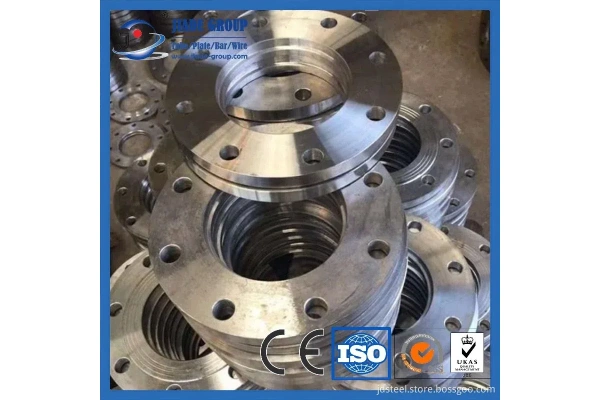
At JIADE Group, every alloy steel flange undergoes strict quality assurance protocols. We utilize advanced testing methods to verify material composition, mechanical strength, and dimensional accuracy.
Our products comply with API 5L PSL1/PSL2, GB, ASTM, ANSI, DIN, and JIS standards. This ensures that our flanges are compatible with international engineering specifications and can be easily integrated into global supply chains.
We employ state-of-the-art manufacturing equipment to produce seamless steel pipes, spiral steel pipes (SSAW), and straight seam steel pipes (ERW/LSA). This technological edge allows us to maintain tight tolerances and superior surface finishes on all flange products.
The first step in selecting an alloy steel flange is analyzing your system's operating environment. Consider factors such as maximum pressure, temperature range, and the nature of the fluid being transported. High-temperature applications may require chromium-molybdenum alloys, while corrosive environments might need nickel-based alloys.
Common alloy steel grades include ASTM A105 (for general use), ASTM A350 LF2 (for low-temperature service), and various stainless steel grades. Choosing the correct grade ensures the flange can withstand the specific stresses it will encounter without compromising safety.
Ensure the flanges meet the precise dimensional requirements of your piping system. Mismatched dimensions can lead to installation difficulties and potential leaks. JIADE Group guarantees that all our flanges adhere strictly to the specified standards, providing a perfect fit for your project needs.
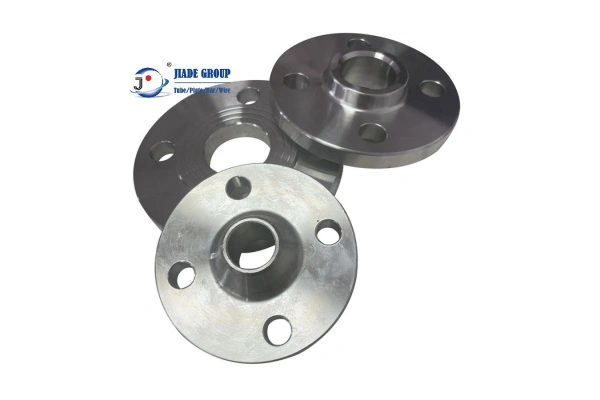
Verify Material Certificates: Ensure Mill Test Certificates (MTC) are provided for each batch, confirming chemical composition and mechanical properties.
Check Pressure Ratings: Confirm that the flange pressure class (e.g., Class 150, 300, 600) matches your system design requirements.
Inspect Surface Finish: Look for smooth surfaces free from cracks, pits, or other defects that could compromise seal integrity.
Confirm Dimensional Tolerances: Verify that bolt hole spacing, bore diameter, and face thickness meet the required standard specifications.
Review Packaging & Shipping: Ensure flanges are properly protected against corrosion and physical damage during transit.
Evaluate Supplier Reputation: Choose a manufacturer with a proven track record, such as JIADE Group, with over 18 years of industry experience.
Some suppliers may substitute lower-grade materials for higher-grade alloys to cut costs. Always request third-party inspection reports to verify material authenticity.
Flanges that do not meet dimensional standards can cause significant installation delays. Work with manufacturers who have strict quality control processes in place.
Improper storage or lack of protective coating can lead to rust and corrosion before installation. Ensure your supplier provides adequate packaging and handling instructions.
The most common grades include ASTM A105 (carbon steel forgings), ASTM A350 LF2 (low-temperature service), and various stainless steel grades like ASTM A182 F304/F316. The choice depends on your specific application requirements regarding temperature, pressure, and corrosion resistance.
We implement a comprehensive quality management system that includes raw material testing, in-process inspections, and final product verification. Our facility complies with international standards such as API 5L, ASTM, ANSI, DIN, and JIS, ensuring every flange meets rigorous performance criteria.
Yes, JIADE Group offers customization services for alloy steel flanges. We can produce flanges in various sizes, pressure classes, and connection types to match your unique engineering specifications. Our flexible manufacturing capabilities allow us to accommodate special requests efficiently.
Lead times vary depending on the order volume and specific requirements. However, with our annual output capacity of 600,000 tons, we are well-equipped to handle both standard and expedited orders. Contact our sales team for a precise timeline based on your project needs.
Absolutely. Alloy steel flanges are specifically designed to withstand high-pressure environments. Their enhanced mechanical properties make them ideal for use in oil and gas pipelines, power plants, and chemical processing facilities where pressure integrity is critical.
Related Products List
Contact Us

Privacy statement: Your privacy is very important to Us. Our company promises not to disclose your personal information to any external company with out your explicit permission.
Fill in more information so that we can get in touch with you faster
Privacy statement: Your privacy is very important to Us. Our company promises not to disclose your personal information to any external company with out your explicit permission.