


Send Message
Privacy statement: Your privacy is very important to Us. Our company promises not to disclose your personal information to any external company with out your explicit permission.


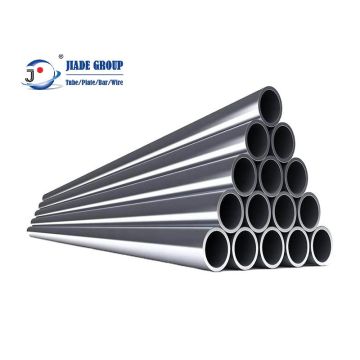


Alloy steel material is a specialized category of metal engineered by combining iron with specific elements such as chromium, nickel, molybdenum, or vanadium. Unlike standard carbon steels, these additions fundamentally alter the microstructure to deliver superior mechanical properties.
For procurement managers, understanding alloy composition is critical because it directly dictates performance under stress, temperature, and corrosion. Selecting the correct alloy steel grade ensures your final product meets rigorous industry standards while optimizing lifecycle costs through enhanced durability and reliability.
Our alloy steel materials are manufactured to comply with international standards including API 5L PSL1/PSL2, GB, ASTM, ANSI, DIN, and JIS, ensuring seamless integration into your supply chain for high-performance applications.
Key Benefit: Engineered consistency reduces quality variability across batches, minimizing inspection overhead and production delays.
JIADE Group operates a modern facility spanning 200,000 square meters, supported by a workforce of over 400 employees and fixed assets valued at 120 million USD. This scale enables an annual output capacity of up to 600,000 tons, ensuring reliable supply even for large-scale projects.
Our production lines are equipped to handle diverse steel formats, including seamless pipes, petroleum casings, oil and gas line pipes, straight seam (ERW/LSAW), spiral (SSAW), and square/rectangular profiles. Every batch undergoes rigorous testing to ensure compliance with API, ASTM, and GB standards.
Procurement Advantage: Centralized manufacturing from raw processing to final export simplifies vendor management, reducing communication friction and ensuring single-point accountability for delivery timelines.
Selecting the optimal alloy steel material requires balancing technical specifications with total cost of ownership. Buyers must evaluate factors such as tensile strength, impact resistance, corrosion tolerance, and weldability relative to their application environment.
Consider operating temperatures, exposure to chemicals, and pressure conditions. High-chromium alloys offer superior corrosion resistance for chemical industries, while low-alloy steels provide excellent toughness for structural bridges and railways.
Ensure the supplier can certify materials against relevant standards (ASTM, API, DIN). Certified materials reduce regulatory risk and facilitate smoother customs clearance and project approvals globally.
Strategic Insight: Partnering with a manufacturer like JIADE Group provides access to expert guidance on grade selection, helping you avoid over-specifying (which increases cost) or under-specifying (which risks failure).
Use this checklist to evaluate potential suppliers and mitigate procurement risks when sourcing alloy steel materials.
Alloy steel materials are integral to critical infrastructure and heavy industry sectors where failure is not an option. JIADE Group's products serve diverse markets requiring high-strength, durable, and corrosion-resistant solutions.
Used extensively in petroleum casing, oil and gas pipelines, and high/low-pressure boilers. The materials withstand extreme pressures and corrosive environments typical in extraction and refining.
Essential for bridge construction, exhibition centers, and steel structures. Provides the tensile strength needed for long-span designs and load-bearing frameworks.
Critical components in high-speed railway systems and electric equipment housings, where weight-to-strength ratios and fatigue resistance are paramount.
Deployed in chemical industry vessels, water treatment projects, and greenhouse buildings, offering resistance to chemical degradation and environmental weathering.
When evaluating alloy steel suppliers, consider partners who combine vertical integration with global compliance. JIADE Group stands out by offering end-to-end control from raw processing to finished export, ensuring quality consistency.
Operating since 2005 with significant fixed assets ($120M), JIADE Group represents a stable, long-term partner capable of sustaining growth alongside your business needs.
From stainless steel and copper to specialized alloy steel pipes and flanges, a single-source approach reduces vendor complexity and streamlines logistics coordination.
Our commitment to API, ASTM, ANSI, DIN, and JIS standards means our materials are readily accepted in regulated markets worldwide, facilitating smoother project execution and regulatory approvals.
Common questions from procurement professionals regarding alloy steel sourcing, specifications, and supplier capabilities.
We produce materials compliant with major international standards including API 5L PSL1/PSL2, GB, ASTM, ANSI, DIN, and JIS. This ensures our products meet the specific regulatory requirements of various global markets.
Our modern factory has an annual output capacity of up to 600,000 tons. This substantial volume allows us to support large-scale industrial projects and maintain consistent supply chains for key accounts.
Our alloy steel materials are widely used in the energy sector (oil/gas pipelines, casings), infrastructure (bridges, railways), chemical processing, water treatment, and construction. These applications demand high durability and specific mechanical properties.
Yes, our manufacturing capabilities extend to special steel and various pipe configurations including seamless, ERW, LSAW, and SSAW. We work closely with clients to meet specific dimensional and material grade requirements.
Related Products List
Contact Us

Privacy statement: Your privacy is very important to Us. Our company promises not to disclose your personal information to any external company with out your explicit permission.
Fill in more information so that we can get in touch with you faster
Privacy statement: Your privacy is very important to Us. Our company promises not to disclose your personal information to any external company with out your explicit permission.