


Send Message
Privacy statement: Your privacy is very important to Us. Our company promises not to disclose your personal information to any external company with out your explicit permission.



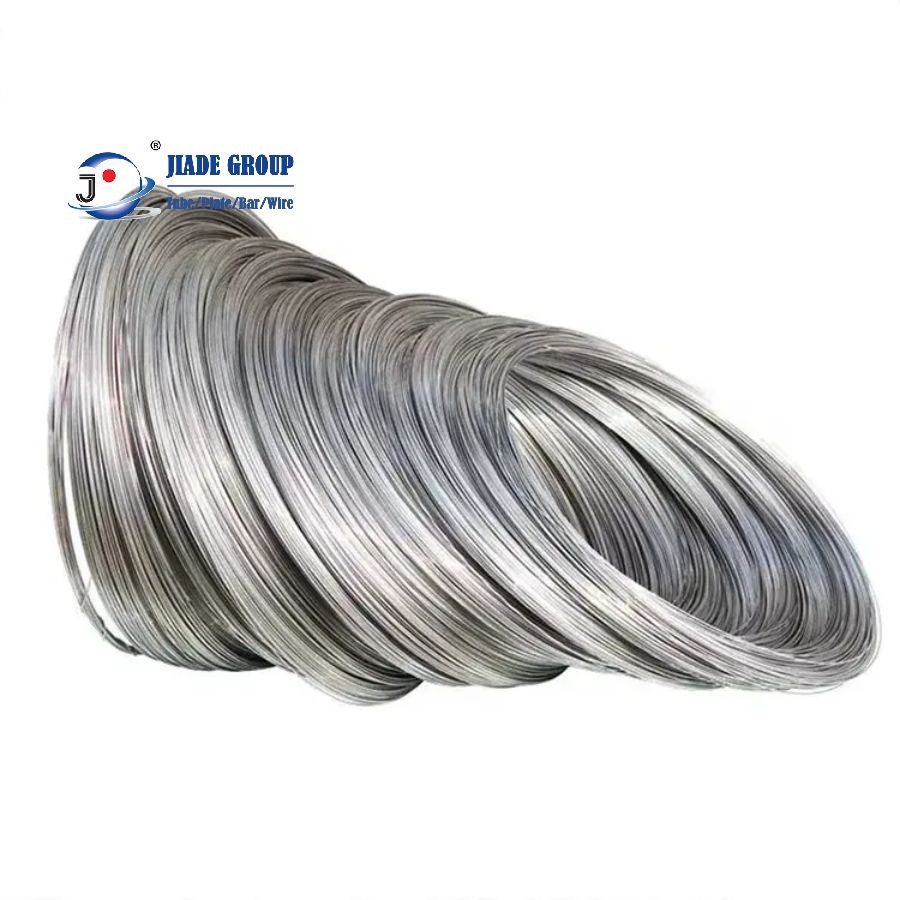
Alloy steel wire is a high-performance metal product engineered with specific chemical elements—such as chromium, nickel, molybdenum, or vanadium—to enhance mechanical properties beyond those of standard carbon steel. These alloying agents provide superior tensile strength, corrosion resistance, heat tolerance, and fatigue life, making alloy steel wire an indispensable component in critical infrastructure, automotive manufacturing, aerospace engineering, and heavy machinery.
For procurement professionals, selecting the right alloy steel wire grade directly impacts equipment reliability, maintenance costs, and operational safety. JIADE Group leverages over 15 years of manufacturing expertise to supply certified alloy steel wire products that meet international standards including ASTM, ANSI, DIN, and JIS specifications. Our production capacity of up to 600,000 tons annually ensures consistent quality and reliable delivery timelines for large-scale industrial projects worldwide.
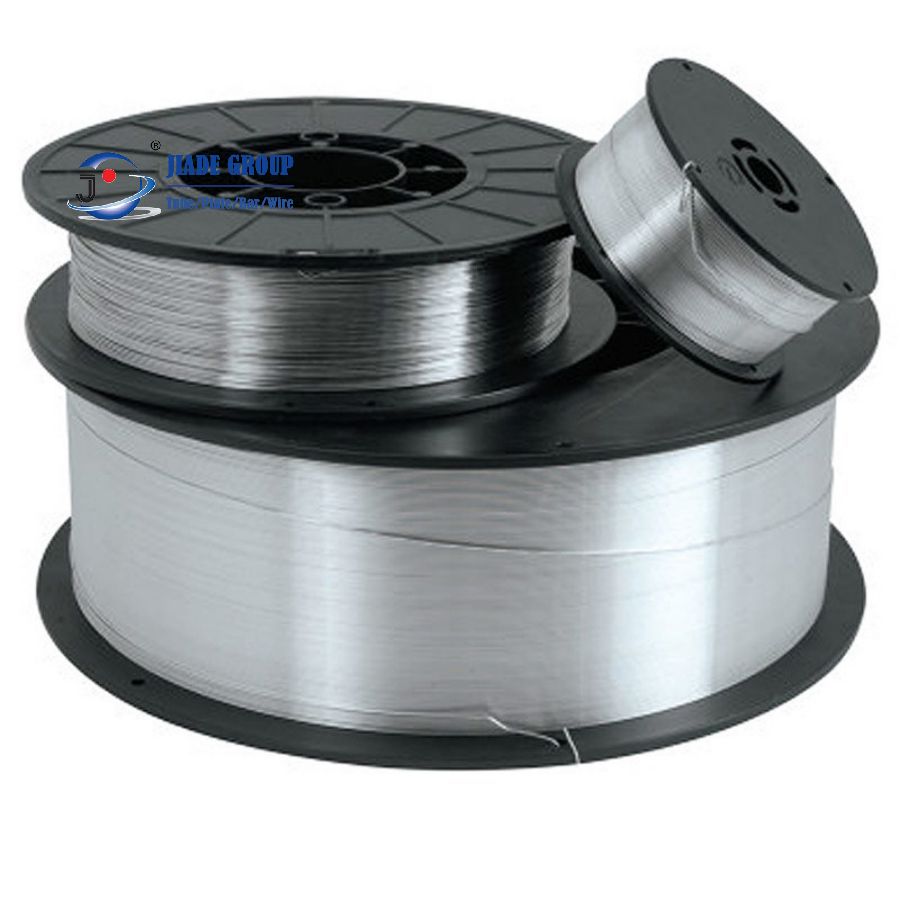
At JIADE Group's modern 200,000 square meter facility, every batch of alloy steel wire undergoes comprehensive quality testing from raw material inspection through final packaging. Our advanced production lines are equipped with real-time monitoring systems that track chemical composition, dimensional tolerances, surface finish, and mechanical properties throughout the manufacturing process.
Why this matters for your procurement: Consistent quality control reduces your risk of production downtime, eliminates costly rework, and ensures compliance with industry-specific regulations. Our factory employs over 400 skilled technicians and maintains fixed assets of 120 million USD, reflecting our commitment to investing in state-of-the-art equipment and personnel training.
Begin by defining the operating conditions your alloy steel wire will face: maximum tensile loads, temperature ranges, corrosion exposure, and fatigue cycles. Different alloy grades offer distinct advantages—chromium-vanadium steels excel in high-stress spring applications, while stainless alloy wires provide exceptional corrosion resistance for marine or chemical environments.
Ensure the alloy steel wire you select complies with relevant international standards such as ASTM A228 for music wire, ASTM A313 for stainless spring wire, or EN 10270 for seamless steel tubes. JIADE Group produces materials compliant with API 5L PSL1/PSL2, GB, ASTM, ANSI, DIN, and JIS standards, giving you flexibility to meet diverse regulatory requirements across global markets.
Partner with a manufacturer that demonstrates proven production scale and financial stability. JIADE Group's annual output capacity of 600,000 tons and 120 million USD in fixed assets means you can rely on consistent supply even during peak demand periods. Our 2005 founding date reflects over 15 years of industry experience and continuous investment in modern manufacturing infrastructure.
The most cost-effective alloy steel wire supplier delivers value across the entire procurement lifecycle. Factor in quality consistency (reducing scrap rates), delivery reliability (preventing production delays), technical support availability, and flexible order quantities. JIADE Group's integrated manufacturing and export capabilities streamline your sourcing workflow and lower your total cost of ownership.
Use this comprehensive checklist to evaluate potential alloy steel wire suppliers and ensure you make informed procurement decisions that minimize risk and maximize value.
When evaluating alloy steel wire manufacturers, prioritize partners who demonstrate vertical integration, financial stability, and a proven export track record. Below are key criteria for selecting a trusted supplier.
A supplier with substantial fixed assets and large-scale production facilities demonstrates long-term commitment and financial resilience. Look for manufacturers with factories exceeding 100,000 square meters and annual capacities above 500,000 tons to ensure supply continuity.
Choose suppliers who produce materials compliant with multiple international standards (ASTM, DIN, JIS, API, GB). This flexibility allows you to source from a single supplier for diverse projects across different regions and regulatory environments.
An established export history indicates familiarity with international shipping, customs documentation, and cross-border compliance. Suppliers with 10+ years of export operations can navigate complex logistics more efficiently, reducing delays and documentation errors.
Alloy steel wire serves as a foundational material across diverse industrial sectors. Understanding these applications helps procurement teams identify the specific performance characteristics required for their particular use case.
High-strength alloy steel wire is essential for petroleum casing, oil and gas line pipes, and pipeline reinforcement systems. Materials complying with API 5L PSL1/PSL2 standards deliver the toughness and pressure resistance needed for deep-well drilling and long-distance transmission pipelines.
Alloy steel wire components in high and low-pressure boiler applications must withstand extreme temperatures and corrosive environments. Special alloy formulations maintain structural integrity under thermal cycling, ensuring safe and efficient power plant operations.
From high-speed railway infrastructure to bridge construction and steel structure frameworks, alloy steel wire provides the tensile strength and fatigue resistance critical for transportation safety. Its durability reduces maintenance frequency and extends service life in demanding conditions.
Corrosion-resistant alloy steel wire is vital for chemical industry equipment, vessel construction, and water treatment project components. Stainless alloy variants resist aggressive chemical environments, protecting infrastructure and reducing replacement costs over time.
Common questions from procurement professionals about alloy steel wire specifications, ordering processes, and supplier evaluation criteria.
Alloy steel wire contains additional elements such as chromium, nickel, molybdenum, or vanadium that significantly enhance mechanical properties compared to standard carbon steel wire. These alloying agents provide higher tensile strength, improved corrosion resistance, better heat tolerance, and superior fatigue life. For applications involving high stress, extreme temperatures, or corrosive environments, alloy steel wire delivers longer service life and reduced maintenance costs despite a higher initial unit price.
Alloy steel wire must comply with relevant international standards depending on the application and target market. Common standards include ASTM (American Society for Testing and Materials), ANSI (American National Standards Institute), DIN (Deutsches Institut für Normung), JIS (Japanese Industrial Standards), and GB (Chinese National Standards). For oil and gas applications, API 5L PSL1/PSL2 certification is typically required. JIADE Group produces materials compliant with all major international standards, ensuring your procurement meets regulatory requirements globally.
Lead times for alloy steel wire depend on order volume, material specifications, and current production schedules. With an annual output capacity of 600,000 tons and a 200,000 square meter manufacturing facility, JIADE Group maintains robust production capabilities to accommodate both standard and expedited orders. Typical lead times range from 15 to 30 days for standard specifications, while custom alloy grades may require additional time for specialized processing. Contact our sales team for precise scheduling based on your project requirements.
Yes, experienced manufacturers like JIADE Group offer custom alloy composition services tailored to specific application requirements. Whether you need enhanced corrosion resistance for marine environments, elevated temperature performance for power generation, or specialized hardness profiles for tooling applications, our engineering team can formulate custom alloy grades that meet your exact specifications. Custom orders typically require sample testing and approval before full-scale production begins.
Upon receipt, verify incoming alloy steel wire against the Mill Test Certificate (MTC) provided by the manufacturer. Key checks include: chemical composition analysis via spectrometry, tensile and hardness testing per specified standards, dimensional measurements for diameter and roundness tolerances, and visual surface inspection for defects. Reputable suppliers provide complete traceability documentation linking each shipment to its production batch. Request third-party inspection reports for critical applications to ensure independent verification of quality parameters.
Professional alloy steel wire packaging includes moisture-resistant wrapping, steel banding for coil stability, and wooden crates or pallets for heavy-duty protection. For containerized ocean freight, desiccant packets and vapor-barrier bags prevent corrosion during transit. JIADE Group follows international packaging standards to ensure materials arrive in optimal condition regardless of shipping distance or climate conditions. Custom packaging requirements for sensitive applications can be accommodated upon request.
Related Products List
Contact Us

Privacy statement: Your privacy is very important to Us. Our company promises not to disclose your personal information to any external company with out your explicit permission.
Fill in more information so that we can get in touch with you faster
Privacy statement: Your privacy is very important to Us. Our company promises not to disclose your personal information to any external company with out your explicit permission.