


Send Message
Privacy statement: Your privacy is very important to Us. Our company promises not to disclose your personal information to any external company with out your explicit permission.



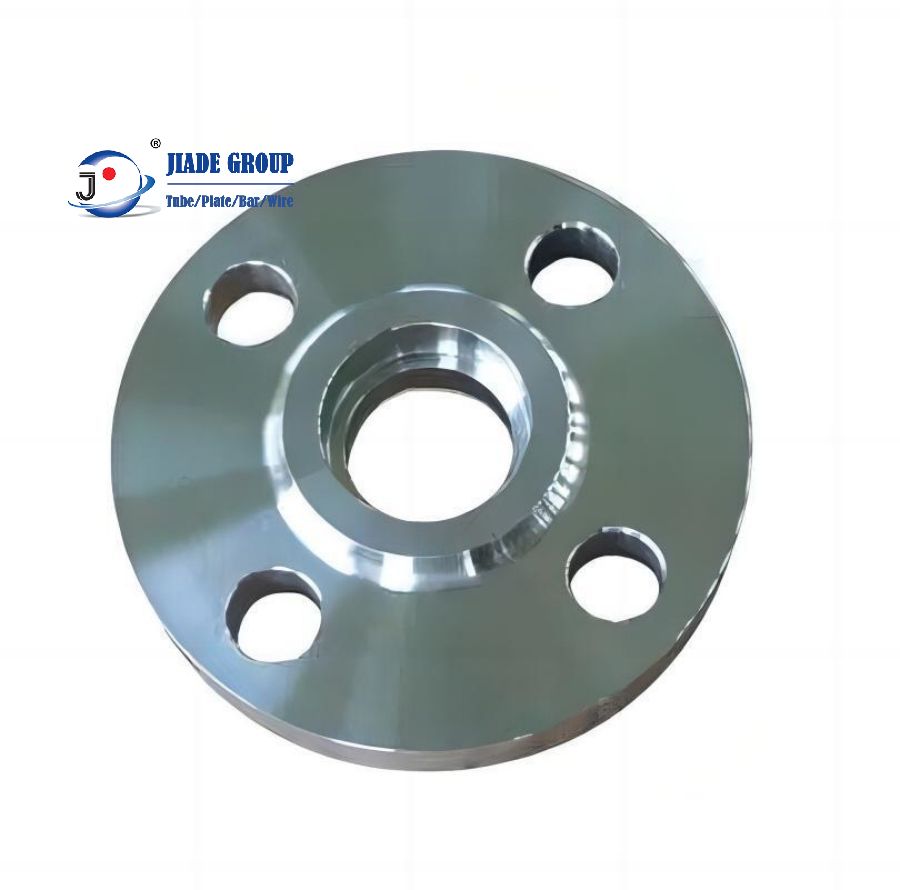
A stainless steel blind flange is a specialized piping component designed to seal off the end of a pipeline, vessel, or pressure equipment. Unlike other flange types that allow flow through, this blind flange features a solid disk with no center bore, effectively blocking fluid passage for maintenance, testing, or future expansion.
The primary purpose of a stainless steel blind flange is to provide a leak-proof closure. It is bolted to an adjacent flange using a full circle of bolts, creating a robust mechanical joint that withstands high internal pressures. This design ensures that hazardous fluids are safely contained during system isolation.
Made from premium grades like 304, 316, and 321 stainless steel, these flanges offer exceptional resistance to corrosion, oxidation, and extreme temperatures. For buyers, this translates to lower lifecycle costs and reduced risk of premature failure in aggressive chemical or marine environments.
JIADE Group delivers more than just standard components. As a manufacturer with over 15 years of experience, we ensure that every blind flange meets rigorous international standards, providing you with reliable supply chain stability and product consistency.
Our blind flanges are manufactured from high-grade stainless steel alloys, ensuring long-term performance in corrosive environments without degradation.
Produced using advanced CNC machining, our flanges guarantee precise hole patterns and face finishes for perfect alignment and leak-free installation.
By sourcing directly from JIADE Group's modern factory, you eliminate middleman markups, significantly reducing your procurement costs while maintaining quality.
At JIADE Group, quality is not an afterthought; it is embedded in our manufacturing process. With a 200,000 square meter facility and an annual output capacity of 600,000 tons, we combine scale with precision to deliver blind flanges that comply with API, ASTM, ANSI, and DIN standards.
Every batch of stainless steel blind flanges undergoes comprehensive testing, including:
This multi-layered quality assurance gives you confidence that every shipment will meet your project specifications, minimizing on-site rework and delays.
Selecting the correct blind flange requires careful consideration of several technical factors. A mismatch in material, pressure rating, or facing can lead to system failures. Use this guide to specify exactly what your project needs.

Choose between 304, 316, or duplex stainless steel based on the chemical environment. 316 offers better chloride resistance, ideal for marine or offshore applications.
Ensure the flange rating (e.g., Class 150, 300, 600) exceeds the maximum operating pressure of your system. Always apply a safety factor as per industry codes.
Match the flange face (Raised Face, Flat Face, or Ring Type Joint) to the mating flange and gasket type to ensure a proper seal.
Before finalizing your purchase order, use this checklist to verify that your supplier and product meet all critical requirements. This proactive step helps avoid costly mistakes and ensures smooth project execution.
Confirm material test certificates (MTC) match the specified grade.
Verify pressure rating matches system design parameters.
Check for surface defects, cracks, or machining imperfections.
Ensure packaging protects against transit damage and corrosion.
Assess production capacity and lead time reliability.
Review quality management certifications and audit history.
Confirm after-sales support and warranty terms.
Check for flexibility in custom orders and bulk pricing.
Stainless steel blind flanges are versatile components used across various industries where system isolation and safety are paramount. Their durability makes them ideal for demanding environments.
Used to cap pipelines during maintenance, pressure testing, or future expansion phases, preventing contamination and leaks.
Ideal for sealing reactors, vessels, and tanks handling corrosive chemicals, thanks to the inherent resistance of stainless steel.
Provides reliable isolation points in municipal and industrial water systems, ensuring hygiene and preventing cross-contamination.
Essential in boiler feed lines and steam systems where high temperature and pressure resistance are critical for safety.
Withstands saltwater exposure and harsh marine conditions, making them perfect for shipbuilding and offshore platforms.
Used in large-scale heating and cooling networks to isolate sections for servicing without draining the entire system.
Get answers to common questions about stainless steel blind flanges to help you make informed procurement decisions.
A regular flange has a center bore to allow fluid flow, while a blind flange is solid with no opening. The blind flange is used to close off the end of a piping system, whereas regular flanges connect pipes together.
Yes, they are specifically designed for high-pressure environments. Their solid construction provides excellent strength and stability, making them suitable for pressure classes ranging from 150 to 2500 and beyond.
Grade 316 stainless steel is generally recommended for highly corrosive environments due to its molybdenum content, which enhances resistance to pitting and crevice corrosion, especially in chloride-rich settings.
A leak-proof seal depends on proper gasket selection, correct bolt tightening sequence, and matching flange face finishes. Using a spiral wound gasket or ring type joint (RTJ) gasket can further enhance sealing performance.
Our blind flanges comply with major international standards including ASME B16.5, ANSI, DIN, and JIS. We also accommodate custom specifications to meet specific project requirements.
Related Products List
Contact Us

Privacy statement: Your privacy is very important to Us. Our company promises not to disclose your personal information to any external company with out your explicit permission.
Fill in more information so that we can get in touch with you faster
Privacy statement: Your privacy is very important to Us. Our company promises not to disclose your personal information to any external company with out your explicit permission.