


Send Message
Privacy statement: Your privacy is very important to Us. Our company promises not to disclose your personal information to any external company with out your explicit permission.



Stainless steel plate is a flat-rolled metal product characterized by a minimum chromium content of 10.5%. This essential alloying element forms a passive oxide layer on the surface, providing exceptional resistance to corrosion and staining compared to carbon steel.
For industrial procurement, these plates are available in various grades—primarily austenitic (like 304 and 316), ferritic, martensitic, and duplex. They serve as the foundational material for heavy-duty construction, chemical processing vessels, architectural cladding, and high-pressure piping systems.
Understanding the specific metallurgical properties of different stainless steel plate grades is critical for ensuring structural integrity and longevity in demanding environments.
Shaanxi Jiade Group Co., Ltd operates a modern facility spanning 200,000 square meters with an annual output capacity of up to 600,000 tons. Our rigorous quality control processes ensure that every stainless steel plate meets international standards such as ASTM, ANSI, DIN, and JIS.
Procurement Benefit: With over 400 employees and $120 million in fixed assets, we guarantee scalable production volumes to meet large-scale project deadlines without compromising material consistency.
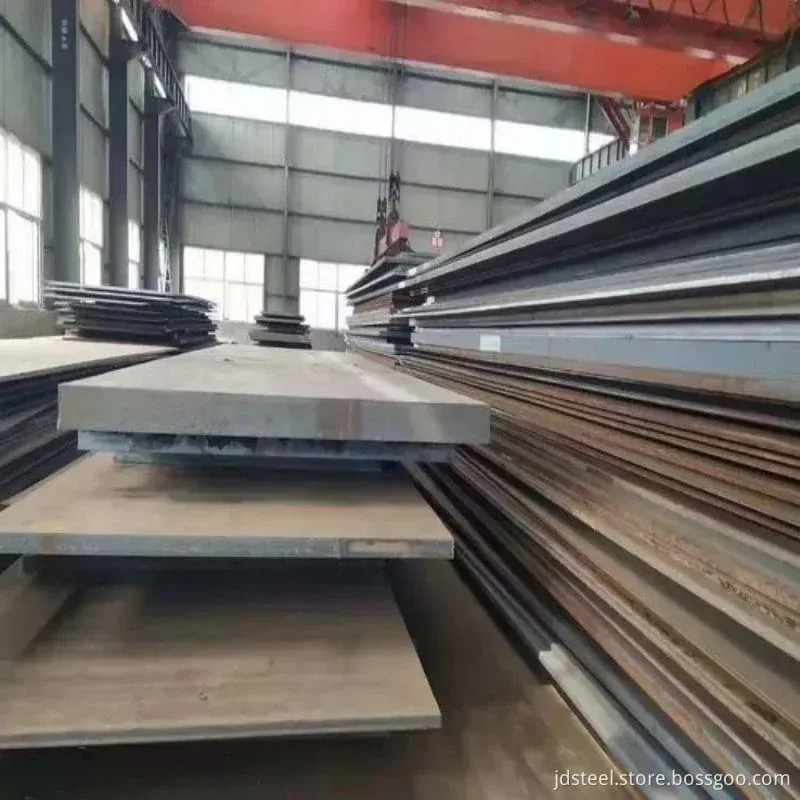
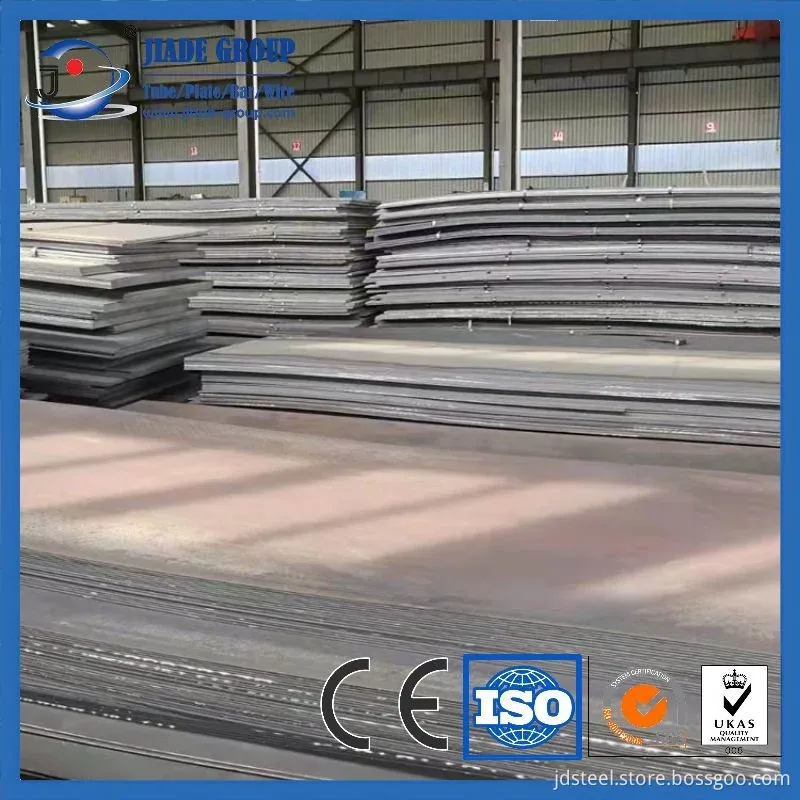
Selecting the correct grade of stainless steel plate requires evaluating the operating environment. Key factors include exposure to moisture, chemicals, temperature extremes, and mechanical stress.
Buyer Value: Precise specification matching prevents premature failure and reduces long-term maintenance costs.
Use this checklist to evaluate potential suppliers and ensure your stainless steel plate orders meet all technical and logistical requirements.
When sourcing stainless steel plate, prioritize manufacturers with comprehensive vertical integration and extensive industry experience.
Look for companies founded at least two decades ago. Longevity indicates financial stability, refined processes, and reliable supply chain networks.
Suppliers with factories exceeding 100,000 square meters can maintain consistent inventory levels and handle emergency rush orders efficiently.
A diversified portfolio (pipes, flanges, special steel) simplifies procurement by allowing you to consolidate orders from a single trusted partner.
A frequent issue arises when substandard alloys are used, leading to rapid rusting in humid environments. This often stems from unverified supply chains lacking proper chemical analysis.
Solution: Mandate third-party lab testing for chromium and nickel content before shipment.
Plates arriving outside specified thickness or width tolerances can cause significant delays in fabrication and assembly lines.
Solution: Implement strict incoming quality control (IQC) checks and require pre-shipment verification reports.
The primary difference lies in corrosion resistance. Grade 304 is an austenitic stainless steel suitable for general-purpose applications, while Grade 316 contains molybdenum, offering enhanced resistance to chlorides and acidic environments, making it ideal for marine and chemical processing use.
High-capacity manufacturers, such as those producing 600,000 tons annually, possess the infrastructure to fulfill large-volume contracts simultaneously. This ensures stable pricing, priority scheduling, and reduced lead times for bulk orders.
Reputable suppliers should adhere to international standards including ASTM, ANSI, DIN, and JIS. Additionally, look for compliance with API 5L for pipeline applications and ISO quality management systems to ensure consistent manufacturing processes.
Yes, major manufacturers offer customization services regarding thickness, width, length, and surface finishes. Customization allows engineers to optimize material usage and reduce waste during the fabrication stage.
Stainless steel plates are widely used in high and low-pressure boilers, petroleum casing, oil and gas pipelines, chemical industry equipment, water treatment projects, bridge construction, and steel structures due to their durability and strength.
Related Products List
Contact Us

Privacy statement: Your privacy is very important to Us. Our company promises not to disclose your personal information to any external company with out your explicit permission.
Fill in more information so that we can get in touch with you faster
Privacy statement: Your privacy is very important to Us. Our company promises not to disclose your personal information to any external company with out your explicit permission.