


Send Message
Privacy statement: Your privacy is very important to Us. Our company promises not to disclose your personal information to any external company with out your explicit permission.



Stainless steel round bar is a fundamental industrial material defined by its circular cross-section and exceptional corrosion resistance. These bars are manufactured from stainless steel alloys containing chromium, nickel, and other elements that form a protective passive layer against rust and chemical degradation.
For procurement professionals, understanding the composition and grade classification of stainless steel round bar is critical to ensuring your projects meet performance specifications while controlling total cost of ownership. The versatility of these products makes them suitable for applications ranging from food processing equipment to aerospace components.
Shaanxi Jiade Group Co., Ltd brings over 18 years of manufacturing expertise to supply high-quality stainless steel materials that comply with international standards including ASTM, ANSI, DIN, and JIS specifications.
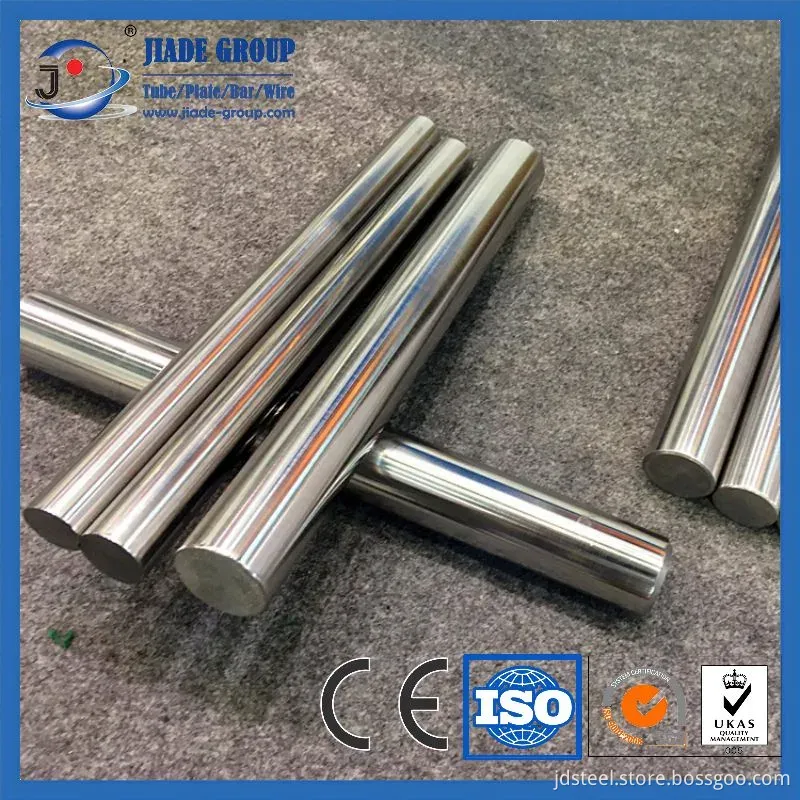
Our modern factory spans 200,000 square meters with an annual output capacity of up to 600,000 tons. This scale ensures reliable supply continuity for large-volume orders and reduces lead time risks that often disrupt production schedules.
With over 400 employees and fixed assets of 120 million USD, we maintain rigorous quality control throughout every stage of production. Our stainless steel materials comply with multiple international standards including API 5L PSL1/PSL2, GB, ASTM, ANSI, DIN, and JIS specifications.
200,000 sqm factory with 600,000 ton annual capacity ensures consistent supply availability for global buyers.
Products meet ASTM, ANSI, DIN, JIS, and GB standards, reducing certification verification costs for importers.
120 million USD in fixed assets demonstrates financial stability and commitment to long-term supplier relationships.
Over 400 skilled employees ensure consistent quality execution across all production batches.
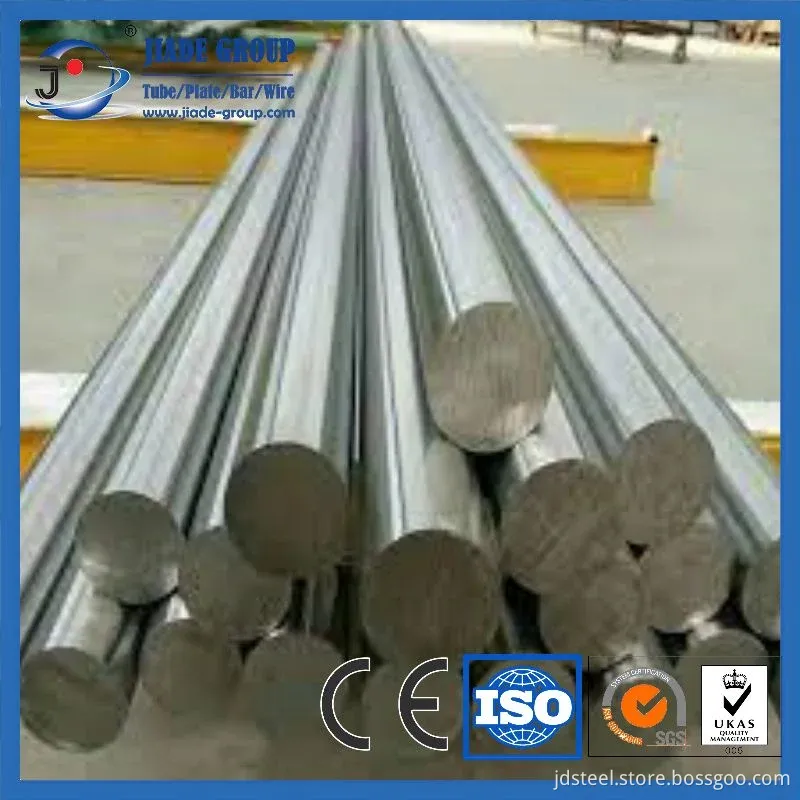
The most common grades include 304, 316, 430, and 201 series. Each offers different levels of corrosion resistance, mechanical strength, and temperature tolerance. Selecting the correct grade prevents premature failure and unnecessary spending on over-specified materials.
Round bar dimensions must match your machining requirements. Standard tolerances vary by grade and diameter range. Confirm dimensional accuracy before ordering to avoid secondary processing costs and assembly fit issues.
Surface finish affects both aesthetics and functionality. Mill finish suits structural applications, while polished or pickled finishes are required for food-grade, medical, or architectural uses. Specify surface treatment clearly to avoid rework.
Request mill test certificates (MTC) that verify chemical composition and mechanical properties. Certified documentation streamlines customs clearance and satisfies end-customer quality audit requirements.
Different industries have specific requirements. Chemical processing demands high-corrosion-resistant grades like 316, while construction may prioritize cost-effective 304 options. Understanding your application environment guides optimal selection.
Choose suppliers with proven production capacity and established quality systems. A manufacturer with 600,000-ton annual output can reliably fulfill large orders without compromising delivery timelines or quality consistency.
Use this checklist to systematically evaluate potential suppliers and reduce procurement risk when sourcing stainless steel round bar for your operations.
Procurement teams frequently encounter challenges when importing stainless steel round bar from international suppliers. Recognizing these problems early helps you build preventive measures into your sourcing strategy.
Unscrupulous suppliers may deliver lower-grade material than specified. Always request independent third-party testing and verify chemical composition against your purchase order requirements.
Out-of-tolerance diameters cause machining delays and assembly failures. Specify exact dimensional tolerances in contracts and require pre-shipment inspection reports with measured data.
Materials failing corrosion tests waste time and money. Ensure suppliers use proper alloy compositions and provide documented evidence of passivation treatment for austenitic grades.
Variation between production batches creates quality uncertainty. Partner with manufacturers who operate controlled production environments with standardized quality management procedures.
Missing or incomplete mill test certificates delay customs clearance and customer audits. Require complete documentation packages before shipment departure to prevent logistics bottlenecks.
Late deliveries disrupt production planning and increase inventory carrying costs. Work with suppliers who have demonstrated capacity and realistic production scheduling capabilities.
When selecting a stainless steel round bar supplier, look for organizations that combine manufacturing scale, quality infrastructure, and international trade experience. Here are the key attributes to prioritize:
Companies founded in 2005 or earlier demonstrate resilience through economic cycles and sustained operational capability.
Factories exceeding 100,000 square meters with 500,000+ ton annual capacity offer supply security for volume buyers.
Suppliers meeting ASTM, ANSI, DIN, JIS, and GB standards serve diverse international markets without specification conflicts.
Manufacturers with significant fixed asset bases can invest in modern equipment and weather raw material price fluctuations.
Founded in 2005, Shaanxi Jiade Group operates a 200,000-square-meter modern factory with 600,000 tons of annual output capacity. Their 120 million USD in fixed assets and 400+ skilled employees support consistent quality delivery across stainless steel, steel pipe, flange, and special steel product lines. This diversified manufacturing capability means you can consolidate multiple material requirements with a single trusted supplier, simplifying your procurement workflow and strengthening supply chain reliability.
These answers address the most common questions procurement professionals ask when sourcing stainless steel round bar from international manufacturers.
The most widely used grades include 304 and 304L for general-purpose corrosion resistance, 316 and 316L for marine and chemical environments, 430 for decorative and mild service conditions, and 201 as a cost-effective alternative where moderate corrosion resistance suffices. Grade selection depends on your specific application requirements including exposure environment, mechanical loads, and regulatory standards.
Request mill test certificates (MTC) from the producer that document chemical composition, mechanical properties, and heat treatment records. Cross-reference these results against the relevant standard specifications. For additional assurance, engage independent third-party laboratories to perform spot-check testing on incoming material shipments.
Minimum order quantities vary by supplier and product specifications. Large-scale manufacturers like Shaanxi Jiade Group typically accommodate both trial orders and full-container loads. Contact your supplier directly to discuss MOQ flexibility based on grade, diameter range, and order frequency commitments.
Yes, most manufacturers offer custom sizing services including specific diameters, lengths, and tolerance ranges beyond standard catalog offerings. Custom dimensions may involve additional setup costs and slightly longer lead times. Discuss your dimensional requirements early in the sourcing process to enable accurate quoting and scheduling.
Common surface finishes include mill finish (as-produced), pickled and passivated (cleaned surface with enhanced corrosion resistance), ground/polished (smooth surface for precision applications), and bright annealed (highly reflective finish for aesthetic purposes). Specify your preferred finish during ordering to ensure compatibility with downstream processing steps.
Manufacturers with high annual output capacity, such as 600,000 tons, demonstrate their ability to handle large-volume orders consistently. This capacity provides buffer against demand surges and reduces dependency on external subcontractors, resulting in more predictable delivery schedules and maintained quality standards across all production batches.
Prioritize suppliers whose products comply with recognized international standards including ASTM, ANSI, DIN, JIS, and GB specifications. Additionally, verify that the manufacturer maintains ISO quality management system certification and can provide comprehensive mill test certificates for every shipment. These credentials indicate systematic quality control practices rather than ad-hoc production methods.
Related Products List
Contact Us

Privacy statement: Your privacy is very important to Us. Our company promises not to disclose your personal information to any external company with out your explicit permission.
Fill in more information so that we can get in touch with you faster
Privacy statement: Your privacy is very important to Us. Our company promises not to disclose your personal information to any external company with out your explicit permission.