


Send Message
Privacy statement: Your privacy is very important to Us. Our company promises not to disclose your personal information to any external company with out your explicit permission.



Titanium valves are specialized industrial components designed to control the flow of fluids, gases, and slurries in demanding environments. Constructed from high-grade titanium alloys, these valves offer exceptional corrosion resistance, making them the preferred choice for industries handling aggressive chemicals, seawater, and harsh process media.
Extended Service Life: Titanium's inherent resistance to pitting and crevice corrosion significantly reduces replacement frequency, lowering your total cost of ownership.
High Strength-to-Weight Ratio: Allows for lighter valve bodies without compromising pressure ratings, simplifying installation and reducing structural load.
Purity Assurance: Non-reactive nature ensures no contamination of process streams, critical for pharmaceutical, semiconductor, and food-grade applications.
Our titanium valves are engineered for reliability and performance in the most challenging industrial conditions. We combine advanced manufacturing techniques with rigorous quality control to deliver products that meet international standards.
Resistant to chlorides, acids, and alkalis, ensuring long-term integrity in corrosive environments where stainless steel fails.
CNC-machined components ensure tight tolerances, leak-tight sealing, and smooth operation even under high pressure.
Tailored materials, connections, and actuation options to match your specific process requirements and space constraints.
Our manufacturing facility adheres to strict quality management systems, ensuring every titanium valve meets or exceeds industry specifications. From raw material inspection to final testing, we maintain full traceability.
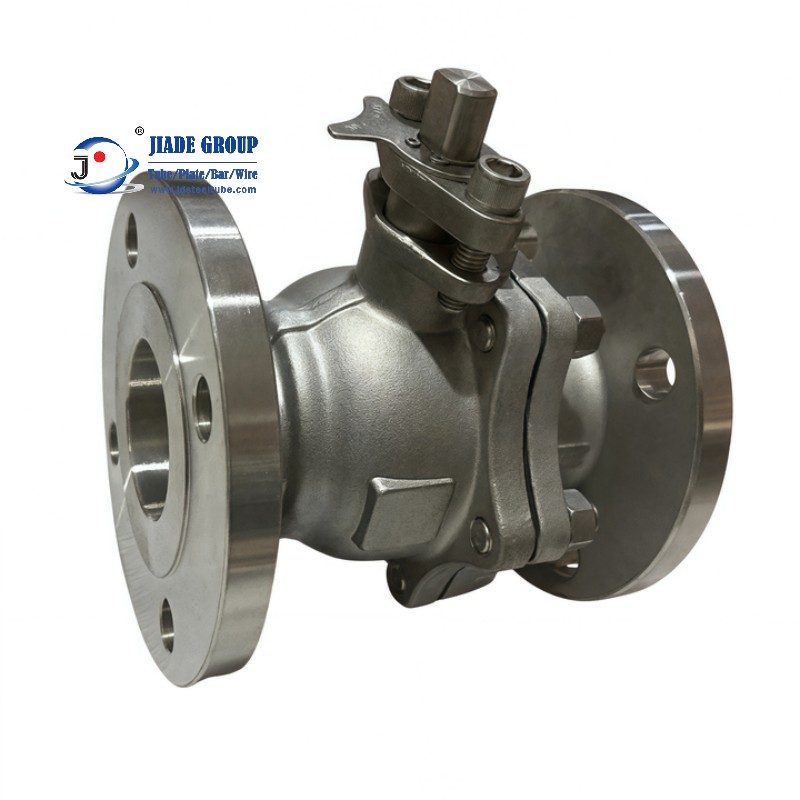
We follow internationally recognized standards including ASTM, ASME, and ISO for design, manufacturing, and testing. Our facility is equipped with state-of-the-art CNC machining centers, automated welding systems, and comprehensive testing labs.
Every valve undergoes hydrostatic pressure testing, pneumatic leakage tests, and material verification using PMI (Positive Material Identification) to guarantee chemical composition compliance.
Full documentation provided for all raw materials, including mill certificates, heat treatment records, and test reports, ensuring complete traceability from source to shipment.
Selecting the appropriate titanium valve requires careful consideration of your process conditions, fluid characteristics, and operational requirements. Use this guide to make an informed decision.
Confirm that titanium Grade 1, 2, or 5 is suitable for your specific chemical environment. While titanium excels in oxidizing acids and chlorides, it may not be ideal for dry chlorine or certain reducing acids.
Match the valve's pressure rating (PN/Class) and temperature range to your system's maximum operating conditions. Titanium maintains strength at elevated temperatures but consider thermal expansion effects.
Choose between gate, globe, ball, check, or butterfly valves based on flow control needs. Ball valves offer quick shutoff, while globe valves provide precise throttling capability.
Connection Type: Flanged, threaded, welded, or clamp connections depending on installation requirements and maintenance access.
Actuation Method: Manual, electric, pneumatic, or hydraulic actuators for remote control and automation integration.
Sealing Material: PTFE, RPTFE, metal-seated, or elastomer options based on chemical compatibility and temperature limits.
Industry Standards: Ensure compliance with NACE MR0175 for sour service, API standards for oil & gas, or FDA requirements for food/pharma.
Use this checklist to evaluate potential suppliers and ensure you receive titanium valves that meet your quality, delivery, and support requirements.
When sourcing titanium valves, partner with manufacturers who demonstrate deep expertise in titanium metallurgy and valve engineering. Look for suppliers who can provide end-to-end solutions from design consultation to after-sales support.
Manufacturing Expertise: Prioritize suppliers with dedicated titanium processing capabilities, including proper welding procedures (WPS/PQR) and heat treatment facilities.
Quality Systems: Verify ISO 9001 certification and experience with industry-specific audits such as API Q1 or NQA-1 for nuclear applications.
Global Experience: Choose suppliers with a proven export history and understanding of international shipping requirements for sensitive titanium components.
Procuring titanium valves comes with unique challenges. Understanding these common issues helps you avoid costly mistakes and ensure successful project outcomes.
Titanium is highly resistant to corrosion, but galvanic corrosion can occur when connected to less noble metals like carbon steel or copper. Always use insulating kits, dielectric unions, or isolation gaskets when connecting titanium valves to dissimilar materials. Ensure proper electrical isolation throughout the piping system to protect both the titanium components and adjacent equipment.
Hydrogen embrittlement occurs when atomic hydrogen diffuses into the titanium lattice, typically during pickling, acid cleaning, or exposure to reducing acids at high temperatures. To prevent this, specify proper post-treatment procedures, avoid excessive acid concentrations, and ensure adequate venting during cathodic protection scenarios. Request material certificates confirming low hydrogen content.
Titanium requires specialized handling, welding, and heat treatment processes that extend production time. Raw material procurement for aerospace-grade titanium alloys can take additional weeks. Quality documentation and testing requirements are more extensive. Plan your procurement schedule accordingly and place orders early to accommodate these timelines.
Always request Positive Material Identification (PMI) test reports from accredited laboratories. Verify that the supplier provides mill certificates showing chemical composition and mechanical properties matching the specified grade. Consider conducting independent PMI testing upon receipt, especially for high-value projects. Reputable suppliers will welcome this verification step.
Store titanium valves in clean, dry environments away from contaminants. Keep protective caps and plugs installed until installation. Avoid contact with carbon steel surfaces to prevent iron contamination. Use original packaging when possible, and inspect regularly for any signs of damage or corrosion. Proper storage extends shelf life and ensures optimal performance upon installation.
Related Products List
Contact Us

Privacy statement: Your privacy is very important to Us. Our company promises not to disclose your personal information to any external company with out your explicit permission.
Fill in more information so that we can get in touch with you faster
Privacy statement: Your privacy is very important to Us. Our company promises not to disclose your personal information to any external company with out your explicit permission.