


Send Message
Privacy statement: Your privacy is very important to Us. Our company promises not to disclose your personal information to any external company with out your explicit permission.



Plumbing copper tube is a vital component in modern water distribution systems, valued for its durability, corrosion resistance, and ability to withstand high pressure. Unlike plastic alternatives, copper offers natural antimicrobial properties that help maintain water quality over the lifespan of the installation.
As a leading manufacturer and exporter with over 18 years of experience, Shaanxi Jiade Group Co., Ltd specializes in producing high-grade copper materials alongside our extensive steel product lines. Our copper tubes are manufactured to international standards, ensuring consistent performance for residential, commercial, and industrial plumbing applications.
Whether you are sourcing for a large-scale construction project or specialized industrial application, our copper tubing solutions provide reliable flow characteristics and long-term structural integrity that reduce maintenance costs and extend system life.
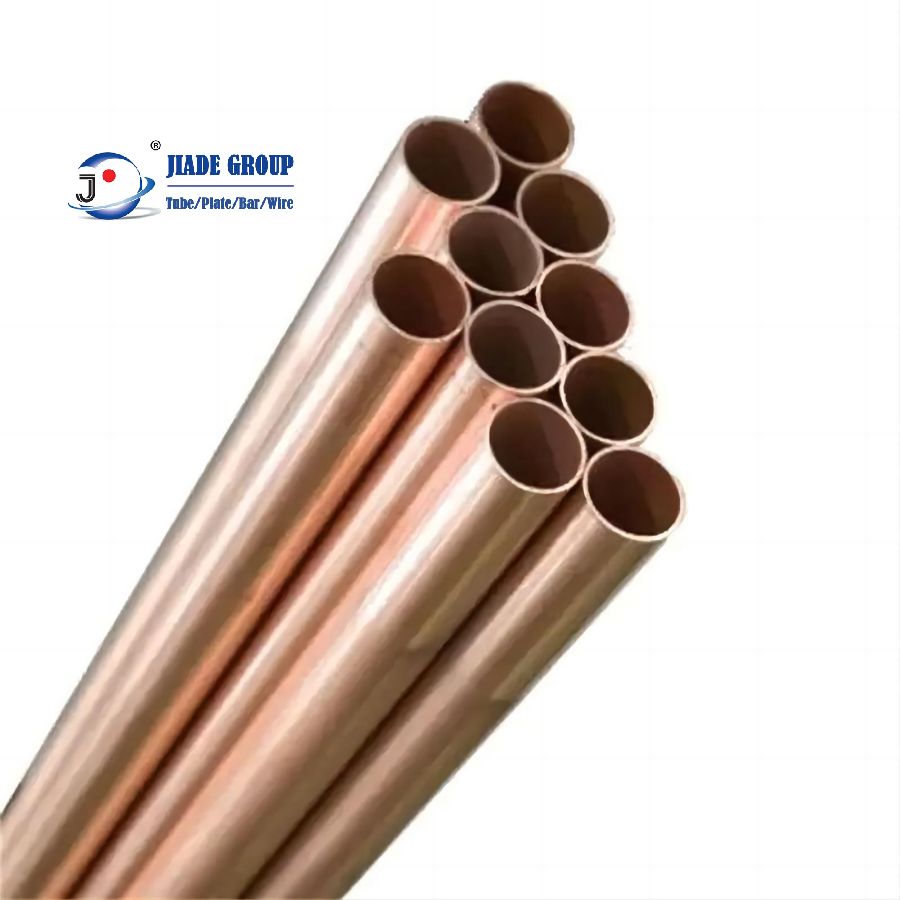
Our 200,000 square meter modern factory utilizes state-of-the-art extrusion and drawing equipment to produce copper tubes with precise dimensional tolerances. This scale of production ensures we can meet large-volume orders without compromising on quality consistency.
Every batch of plumbing copper tube undergoes rigorous testing including hydrostatic pressure tests, ultrasonic inspection, and surface quality checks. Our quality management system ensures compliance with ASTM B88, GB/T 17791, and other relevant international standards.
We source high-purity copper cathodes as raw materials, maintaining strict control over alloy composition. The resulting copper tubes exhibit excellent thermal conductivity, mechanical strength, and formability — essential characteristics for reliable plumbing installations.
With an annual output capacity of up to 600,000 tons across all product categories, Jiade Group can reliably supply copper materials for projects of any scale. Our fixed assets of 120 million USD reflect continuous investment in production technology and quality assurance infrastructure.
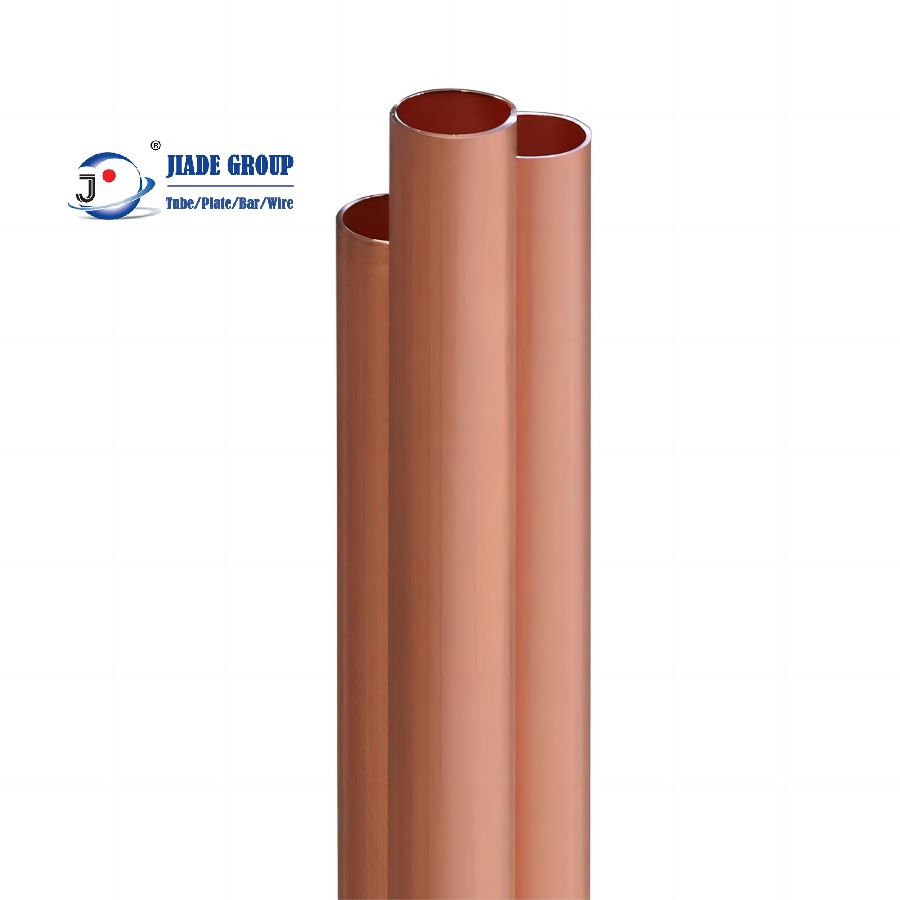
Selecting the correct copper tube for your plumbing project requires understanding several key specifications that directly impact performance, cost, and compliance. Here are the critical factors procurement professionals should evaluate:
Copper tubes are classified by wall thickness types such as Type K, L, M (ASTM) or different pressure ratings. Thicker walls provide higher pressure tolerance and longer service life, making them ideal for underground or high-pressure applications. Match the specification to your system's operating pressure requirements.
The inner diameter determines water flow capacity. For residential plumbing, common sizes range from 1/2 inch to 2 inches. Industrial applications may require larger diameters. Calculate your system's flow rate needs to avoid undersized tubing that restricts water delivery.
Ensure the copper tubes comply with recognized standards such as ASTM B88 (standard specification for copper water tube), GB/T 17791, or EN 1057. Compliance guarantees dimensional accuracy, material purity, and test documentation — reducing your risk of non-compliance penalties or system failures.
Choose between annealed (soft temper) and hard-drawn copper tubes based on your installation method. Soft temper tubes are easier to bend and shape on-site, while hard-drawn tubes offer higher tensile strength for straight runs. Surface finish affects both aesthetics and corrosion resistance.
Copper tubes are the gold standard for domestic water supply lines, hot and cold water distribution, and gas piping in residential buildings. Their antimicrobial properties and long service life make them ideal for homes where water safety and reliability are paramount.
Large-scale commercial buildings, hotels, hospitals, and shopping centers rely on copper tubing for their HVAC systems, fire suppression networks, and potable water distribution. The material's durability supports the demanding requirements of high-traffic commercial environments.
Chemical processing plants, food and beverage facilities, and pharmaceutical manufacturers use copper tubes for process water, steam lines, and specialty fluid transfer. The material's corrosion resistance and cleanability meet stringent industrial hygiene standards.
Air conditioning units, heat pumps, and refrigeration systems depend on copper tubing for refrigerant lines due to its excellent thermal conductivity and ability to withstand cyclic temperature changes. Properly sized copper refrigerant lines ensure optimal energy efficiency.
Municipal water treatment facilities and industrial wastewater systems utilize copper tubing for various stages of purification and distribution. The material's inherent resistance to biofilm formation supports clean water handling throughout the treatment process.
Modern greenhouse operations use copper tubing for irrigation distribution, heating systems, and climate control. The material's longevity in humid environments and resistance to degradation makes it a cost-effective choice for agricultural infrastructure.

Confirm that the supplier provides mill test certificates (MTC) for every batch, verifying chemical composition and mechanical properties of the copper material.
Verify compliance with the specific standards required by your project — ASTM, GB, EN, or local building codes — before placing the order.
Request samples for pre-production evaluation to assess dimensional accuracy, surface quality, and workability before committing to bulk quantities.
Evaluate the manufacturer's production capacity and lead times to ensure they can deliver your order volume within your project timeline.
Review the supplier's export experience and logistics capabilities, especially for international shipments requiring proper packaging and documentation.
Assess whether the supplier offers competitive pricing structures for your order volume, including potential discounts for recurring or large-volume purchases.
When sourcing plumbing copper tubes, partnering with an established manufacturer that combines scale, quality, and global experience delivers significant advantages. Here is why industry buyers recommend working with integrated producers like Jiade Group:
Founded in 2005, Jiade Group brings nearly two decades of manufacturing expertise to every order. With over 400 employees and a 200,000 square meter facility, they have proven their ability to consistently deliver at scale while maintaining quality standards that meet international requirements.
As a producer of stainless steel, carbon steel, alloy steel, and copper materials, Jiade Group simplifies procurement by offering multiple material types from a single source. This consolidation reduces vendor management overhead and enables coordinated logistics for multi-material projects.
Jiade Group's products serve markets worldwide across diverse industries including petroleum, construction, chemical processing, and water treatment. Their export infrastructure handles complex international shipping, customs documentation, and compliance requirements seamlessly.
With fixed assets of 120 million USD and an annual output capacity of 600,000 tons, the company demonstrates the financial depth necessary to invest in quality technology, maintain inventory buffers, and absorb market fluctuations — protecting your supply chain from disruption.
Some suppliers deliver copper tubes with inconsistent outer diameters or wall thickness variations beyond acceptable tolerances. This leads to fitting failures, leaks, and costly rework during installation. Always request third-party verification reports and conduct incoming inspections upon receipt.
Substandard copper alloys or improper heat treatment can result in premature corrosion, pitting, or stress cracking in installed plumbing systems. Ensure your supplier uses certified raw materials and follows proper annealing processes to maintain the material's corrosion-resistant properties.
Surface defects such as scratches, oxidation marks, or uneven finishes not only affect aesthetics but can create initiation points for corrosion. Specify acceptable surface finish criteria in your purchase agreement and require visual inspection records from the manufacturer.
Unreliable lead times from manufacturers lacking adequate capacity planning can delay entire construction projects. Partner with suppliers who demonstrate proven on-time delivery records and maintain buffer stock for commonly specified copper tube sizes.
Missing mill test certificates, origin documentation, or compliance statements can cause customs delays and project non-compliance issues. Require complete documentation packages with every shipment, including material certifications, test reports, and packing lists.
The primary standards governing plumbing copper tubes include ASTM B88 (Standard Specification for Copper Water Tube) widely used in North America, GB/T 17791 in China, and EN 1057 across Europe. These standards define dimensional tolerances, mechanical properties, chemical composition requirements, and testing procedures. When procuring copper tubes, always specify the applicable standard relevant to your project's jurisdiction and regulatory requirements.
Copper tubes are categorized by wall thickness: Type K (thickest), Type L (medium), and Type M (thinnest). Type K is typically used for underground service lines and high-pressure applications due to its superior pressure rating. Type L is the most common choice for residential interior plumbing, balancing cost and performance. Type M is suitable for low-pressure interior applications where cost optimization is a priority. Selecting the appropriate type ensures your system meets pressure requirements while optimizing material costs.
Yes, plumbing copper tubes are fully suitable for both hot and cold water distribution systems. Copper maintains its structural integrity at temperatures commonly encountered in domestic hot water systems (up to approximately 200°C / 392°F). Its excellent thermal conductivity also makes it ideal for hot water lines where heat retention is desired. For extreme temperature applications, thicker-walled types (K or L) are recommended to handle thermal expansion stresses.
Reputable manufacturers like Jiade Group use protective packaging that includes moisture-resistant wrapping, steel strapping, and wooden pallets or crates to prevent damage during transit. Copper tubes are typically bundled by length and diameter, with each bundle secured to prevent shifting. For ocean freight, desiccant packs and vapor barrier wrapping protect against saltwater corrosion. Proper packaging preserves surface quality and prevents deformation, ensuring the tubes arrive in install-ready condition.
Lead times vary based on order volume, specifications, and current production schedules. Standard sizes and grades in stock may ship within 7-15 days. Custom specifications or large-volume orders typically require 20-35 days for production. Ocean freight adds approximately 25-40 days depending on the destination port. Working with an established manufacturer with significant production capacity — such as Jiade Group's 600,000-ton annual output — helps minimize lead time variability and ensures more predictable delivery scheduling.
Copper is one of the most recyclable materials in the construction industry. It can be recycled indefinitely without losing its inherent properties, making it an environmentally responsible choice for plumbing systems. Recycled copper accounts for a significant portion of global copper production. From a lifecycle perspective, copper plumbing systems last 50+ years, reducing the frequency of replacements and associated waste. Many jurisdictions offer green building credits for using recyclable, durable materials like copper in construction projects.
Related Products List
Contact Us

Privacy statement: Your privacy is very important to Us. Our company promises not to disclose your personal information to any external company with out your explicit permission.
Fill in more information so that we can get in touch with you faster
Privacy statement: Your privacy is very important to Us. Our company promises not to disclose your personal information to any external company with out your explicit permission.