
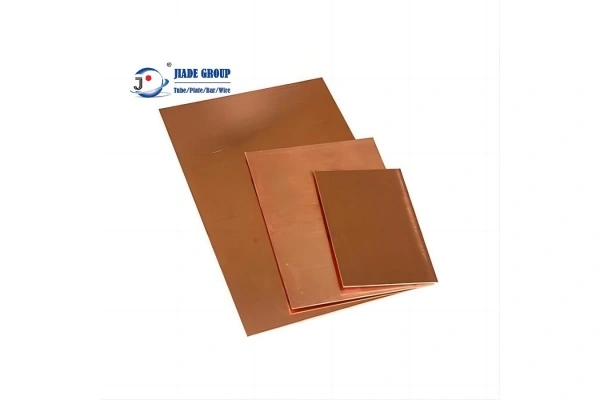
Copper Plate

Understanding Copper Plate for Industrial Procurement

Copper plate is a flat-rolled copper product with a thickness typically exceeding 0.2mm, serving as a fundamental raw material across diverse industrial sectors. Known for its exceptional electrical conductivity, thermal resistance, and corrosion properties, copper plate enables manufacturers to build reliable infrastructure components.

As a critical component in power transmission systems, electronic manufacturing, and construction applications, selecting the right copper plate specification directly impacts your final product's performance and longevity. Understanding material grades, temper conditions, and surface treatments ensures optimal procurement outcomes.

JIADE Group brings over 15 years of metallurgical expertise to supply high-quality copper materials that meet international standards including ASTM, GB, JIS, and DIN specifications. Our comprehensive inventory covers various copper alloys suitable for demanding industrial applications.

Quality Standards in Copper Plate Manufacturing

Advanced Production Capabilities

Our modern factory spans 200,000 square meters with an annual output capacity of up to 600,000 tons. This scale ensures consistent supply availability for large-scale industrial projects while maintaining strict quality control at every production stage.

Comprehensive Testing Protocols

Every batch of copper plate undergoes rigorous mechanical testing, chemical composition analysis, and surface inspection. We verify tensile strength, elongation, hardness, and conductivity values against specified standards before shipment.

Certified Material Traceability

Full material traceability from raw copper cathode to finished plate ensures complete documentation for regulatory compliance. Each shipment includes mill test certificates detailing chemical composition, mechanical properties, and heat treatment records.

Copper plate quality control and manufacturing process

How to Select the Right Copper Plate Specification

Material Grade Selection

Choose between pure copper grades like C11000 (electrolytic tough pitch) for maximum conductivity or alloy variants like C17200 (beryllium copper) for enhanced strength and spring properties. Your application dictates the optimal grade.

Temper and Hardness Requirements

Copper plate is available in annealed (O temper), half-hard (H1/2), and full-hard (H1/H2) conditions. Softer tempers offer better formability for complex fabrication, while harder tempers provide superior structural integrity.

Dimensional Tolerance Standards

Precision requirements vary by application. Standard tolerances suit general fabrication, while tight tolerances are essential for electronic contacts and precision instrument components. Specify exact thickness, width, and flatness requirements upfront.

Surface Finish Specifications

Surface quality affects both appearance and functionality. Mill finish provides cost-effective solutions for structural applications, while polished or coated surfaces may be required for visible architectural elements or specialized electrical connections.

Essential Copper Plate Procurement Checklist

Technical Specifications

Verify all dimensional parameters including thickness tolerance, width range, and length requirements match your manufacturing needs before placing orders.

Certification Verification

Request material test reports and certification documents confirming compliance with ASTM, GB, JIS, or other applicable standards for your industry.

Supplier Capability Assessment

Evaluate supplier production capacity, lead times, and quality management systems to ensure reliable delivery schedules for your project timelines.

Packaging and Shipping

Confirm packaging methods protect against moisture damage and physical deformation during transit. Proper crating prevents surface scratches and edge damage.

Frequently Asked Questions About Copper Plate Sourcing

What is the minimum order quantity for copper plate?

Minimum order quantities vary based on specific grade, dimensions, and temper requirements. Standard sizes often have lower MOQs due to existing inventory, while custom specifications may require larger quantities to justify production runs. Contact our sales team for current MOQ requirements.

How long does copper plate production take?

Standard copper plate specifications typically ship within 7-15 days from confirmed orders. Custom grades, special surface treatments, or non-standard dimensions may require 20-30 days depending on production scheduling and material availability.

Can copper plate be customized to specific dimensions?

Yes, we offer custom cutting services to meet precise dimensional requirements. Our processing capabilities include slitting, shearing, and precision cutting to accommodate various manufacturing specifications and reduce secondary processing costs.

What quality guarantees come with copper plate purchases?

All copper plate shipments include comprehensive quality documentation including mill test certificates, chemical composition reports, and mechanical property verification. We maintain strict quality control throughout production and offer replacement guarantees for any material defects.

Which copper plate grades are most popular for industrial use?

C11000 (pure copper) dominates electrical and electronics applications due to excellent conductivity. C17200 (beryllium copper) serves spring and connector applications requiring high strength. C14500 (oxygen-free copper) excels in vacuum and semiconductor environments where purity is critical.

Common Copper Plate Procurement Challenges

Surface Damage During Transit

Inadequate packaging can cause scratches, dents, and oxidation during shipping. Request protective wrapping, corner guards, and moisture-resistant barriers to preserve surface quality upon delivery.

Dimensional Variations

Thickness variations and width deviations affect downstream manufacturing processes. Specify tolerance requirements clearly and request pre-shipment inspection reports to verify dimensional accuracy.

Material Certification Gaps

Missing or incomplete documentation creates compliance risks. Ensure suppliers provide complete material test reports matching purchase order specifications before shipment release.

Supply Chain Disruptions

Raw material shortages and logistics delays impact delivery schedules. Work with established suppliers who maintain adequate inventory levels and diversified transportation options.

Key Factors When Evaluating Copper Plate Suppliers

  • Production Capacity and Scale

    Select suppliers with substantial manufacturing capabilities like JIADE Group's 200,000 square meter facility and 600,000-ton annual capacity. Large-scale operations ensure consistent supply availability and competitive pricing for volume orders.

  • Quality Management Systems

    Prioritize suppliers implementing comprehensive quality control protocols including incoming material inspection, in-process monitoring, and final product verification. Look for ISO certification and documented quality procedures.

  • Technical Expertise and Support

    Experienced suppliers provide valuable technical guidance on material selection, processing recommendations, and application optimization. Their engineering support reduces development time and improves final product performance.

  • Global Logistics Capabilities

    International suppliers should demonstrate proven export experience with proper documentation handling, customs clearance support, and reliable freight partnerships to ensure timely global delivery.

Industrial Applications of Copper Plate Materials

Electrical and Electronics

Copper plate serves as the foundation for busbars, circuit boards, transformer cores, and motor laminations. Its superior electrical conductivity makes it indispensable for power distribution systems and electronic device manufacturing.

Construction and Architecture

Architectural applications include roofing, cladding, decorative elements, and structural components. Copper's natural corrosion resistance and aesthetic appeal create durable, visually striking building features that age gracefully over decades.

Industrial Equipment Manufacturing

Heavy machinery, chemical processing equipment, and marine hardware utilize copper plate for heat exchangers, condenser tubes, and corrosion-resistant structural components. Thermal conductivity enhances heat transfer efficiency in industrial systems.

Renewable Energy Systems

Solar panel frames, wind turbine components, and battery storage systems depend on copper plate for efficient power transmission and environmental durability. The material supports sustainable energy infrastructure development worldwide.

Transportation and Automotive

Electric vehicle batteries, charging station components, and traditional automotive parts increasingly incorporate copper plate for improved conductivity, thermal management, and lightweight design optimization.

Medical and Scientific Instruments

High-precision medical devices, laboratory equipment, and scientific instruments benefit from copper plate's antimicrobial properties, thermal stability, and electromagnetic shielding capabilities for sensitive measurements.

We will contact you immediately

Fill in more information so that we can get in touch with you faster

Privacy statement: Your privacy is very important to Us. Our company promises not to disclose your personal information to any external company with out your explicit permission.

Send